


Bose Speaker Foam Rot Repair: A Professional Guide to Restoring Your Sound
August 6, 2026
Bose Ultra Open Earbuds: The Complete Guide to Open-Ear Audio in South Africa
August 9, 2026
Why settle for a massive, overpriced LED screen that dominates your entire wall even when it’s switched off? You want the immersive scale of a cinema at home, but you’ve likely realised that a laser tv is a far more versatile choice than a standard television or a finicky projector. You’re likely tired of closing the curtains just to watch the rugby or worrying about expensive bulb replacements every few years. It’s a common dilemma for homeowners seeking a premium viewing experience without the technical headaches and high maintenance costs of the past.
This guide explores how modern ultra-short-throw technology delivers a breathtaking 100-inch or 120-inch 4K experience. Discover how these systems combine the massive scale of a cinema screen with the everyday convenience of a traditional television. You’ll learn how advanced optics allow for placement just centimetres from the wall, even in brightly lit rooms. We’ll break down the 20,000-hour lifespan of current laser engines and explain how to integrate professional audio to create a sophisticated entertainment centre. It’s time to rethink what’s possible in your lounge and embrace the future of home cinema.
Key Takeaways
- Understand how a laser tv replaces traditional sets by combining ultra-short-throw optics with a dedicated screen for a massive, daylight-ready image.
- Explore the precision of 4K enhancement and HDR10+ technology that keeps your favourite content crisp and vibrant even in sun-drenched South African lounges.
- Compare the cost-efficiency of laser projection against large LED panels to see why it is the smarter investment for displays exceeding 100 inches.
- Identify why pairing your visuals with a professional audio system, like the Bose Lifestyle series, is essential for a balanced and immersive home cinema.
- Learn the benefits of sourcing your equipment from an authorised national specialist to guarantee expert advice and long-term technical support.
What is a Laser TV? Defining the Ultra Short Throw Category
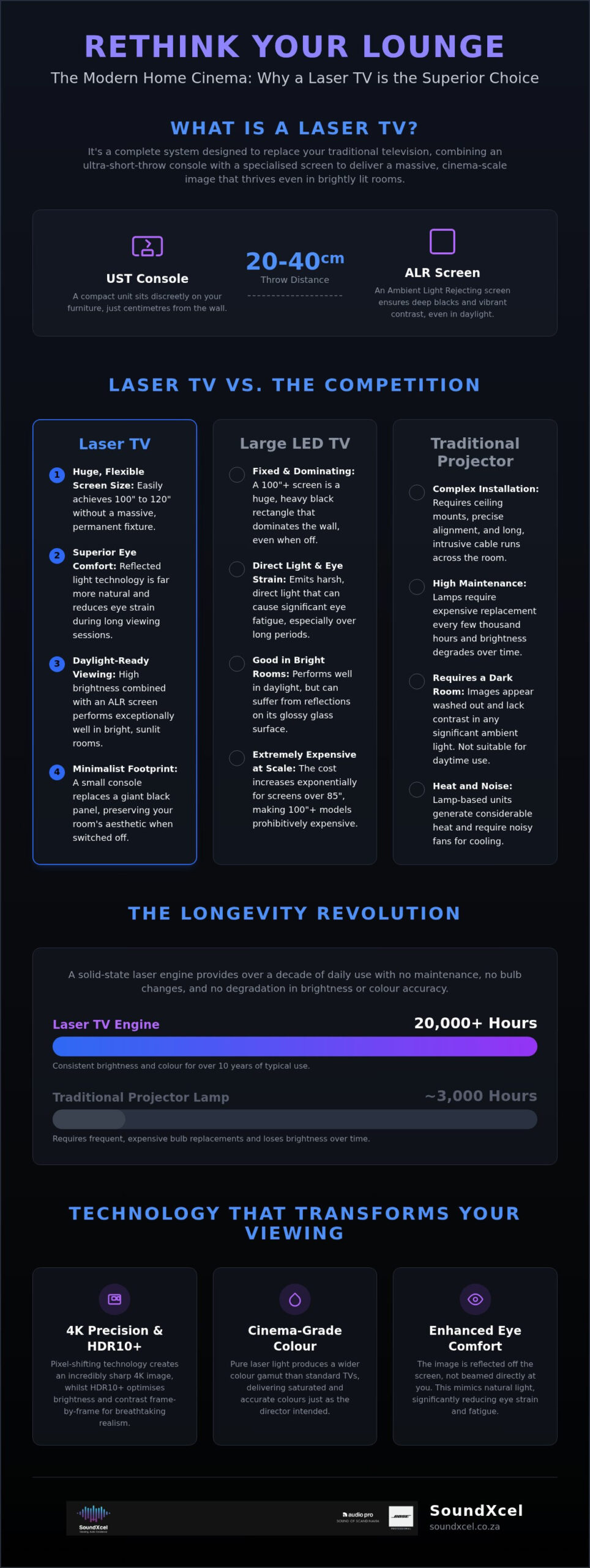
A laser tv represents a fundamental shift in how we define home entertainment. It isn’t merely a projector; it’s a sophisticated system designed to replace the traditional flat-panel television in your lounge. By combining a specialised ultra-short-throw console with a high-performance screen, this technology offers the massive scale of a cinema without the limitations of a dark room. The “TV” moniker is well-earned. Unlike older projection systems that required long warm-up times and pitch-black environments, these systems provide instant-on brightness and vibrant colours that stand up to South African sunlight.
Understand that this setup differs from the television sets of the past by decoupling the light source from the display surface. You no longer need to hang a heavy, fragile 100-inch glass panel on your wall. Instead, a compact unit sits discreetly on your media furniture. This configuration provides a more natural, reflected light experience that is easier on the eyes during long viewing sessions. It’s a versatile solution for everything from the evening news to a weekend movie marathon.
The Core Components: Projector and ALR Screen
The magic of this system lies in the ultra-short-throw (UST) lens. These complex optics allow the projector to sit just 20 to 40 centimetres away from the wall whilst casting a massive, perfectly focused image. This eliminates the need for ceiling mounts or long cable runs across the room. To achieve true “TV” performance, these consoles are paired with an Ambient Light Rejection (ALR) screen. These screens use microscopic optical layers to filter out light from windows and ceiling fixtures, reflecting only the projector’s light back to the viewer. This ensures deep blacks and punchy contrast even in a well-lit room.
Laser vs. Lamp: The Longevity Revolution
Traditional projectors rely on mercury lamps that lose brightness almost immediately and require replacement every few thousand hours. A modern laser tv uses a solid-state laser engine with a lifespan typically exceeding 20,000 hours. This means no bulb changes, no maintenance, and no sudden failures in the middle of a big game. You can expect:
- Consistent colour accuracy that doesn’t degrade over years of use
- Stable brightness levels from the first day to the last
- Reduced heat output and quieter operation compared to lamp-based units
This longevity makes the investment far more practical for the modern household. Brands like Epson have perfected this technology, ensuring that your home cinema remains a reliable, high-performance centrepiece for over a decade of daily use.
The Technology Behind the Beam: How It Transforms Your Lounge
Modern laser tv systems utilise advanced 4K enhancement and pixel-shifting technology to achieve stunning detail. Instead of a native 4K panel, these devices shift pixels at incredibly high speeds to double the resolution on the screen. This results in a sharp, cinematic image that rivals traditional high-end displays. When you combine this with HDR10+, you get a dynamic range that manages highlights and shadows frame-by-frame. It ensures that dark scenes remain detailed whilst bright highlights pop with realism. It’s a huge leap forward for home viewing.
Laser light sources naturally produce a wider colour gamut than standard LEDs. They don’t rely on white backlights filtered through colour wheels or layers. Pure laser light delivers saturated, accurate colours that meet professional cinema standards. This precision makes your favourite films look exactly as the director intended. You’ll notice the difference in skin tones and natural landscapes immediately.
Eye comfort is another significant lifestyle benefit. Traditional TVs use direct backlighting, which shines light directly into your eyes. A laser system uses reflected light. The beam hits the screen and then bounces toward you, mimicking how we see the natural world. This setup is much more comfortable for long gaming sessions or movie nights. It reduces strain significantly compared to staring at a giant glass panel.
Brightness and Lumens in Modern Living Spaces
Don’t be misled by “Marketing Lumens” often found on budget retail sites. Always look for ANSI Lumens. This is the industry standard for measuring actual brightness. High-end laser tv models, particularly those from Epson, are engineered to maintain high lumen counts even in rooms with plenty of ambient light. High brightness ensures that the contrast ratio remains high, preventing the “washed out” look common in older projectors. It makes the system viable for daytime use in South African homes.
Smart Integration and Connectivity
Current units function as fully-fledged smart hubs. They feature built-in streaming platforms and wireless casting, removing the need for external boxes. For gamers, HDMI 2.1 support is crucial. It provides lower input lag and higher refresh rates, making a 120-inch screen a viable option for competitive play. Keep your setup clean by using the internal cable management channels found in premium consoles. If you need help choosing the right model for your room, you can consult with our specialists to find the perfect fit.
Laser TV vs. Traditional Projectors and Large LED Screens
Choosing between a massive LED panel and a laser tv often comes down to a simple cost-per-inch calculation. Once you look beyond the standard 85-inch display, the price of traditional LED televisions in South Africa tends to skyrocket. A 98-inch or 100-inch glass panel can cost hundreds of thousands of Rands; making it a prohibitive luxury for most. In contrast; a laser system provides a 100-inch or 120-inch cinematic experience at a much more accessible price point. You get significantly more screen real estate for your investment without sacrificing the 4K clarity you expect from a premium display. For a detailed breakdown of how these two technologies stack up across every key metric, our home cinema projector vs TV comparison for South African homes covers everything from ambient light performance to long-term running costs.
Installation flexibility is another area where the ultra-short-throw console wins. Mounting a 100-inch LED television requires specialised brackets; structural wall reinforcement; and a team of installers. It’s a permanent and risky endeavour. A laser console sits comfortably on your existing media unit just centimetres from the wall. There are no ceiling mounts to drill and no long cable runs to hide. If you decide to move house or redecorate; you simply pick up the unit and go. Moving a 120-inch glass panel is a logistical nightmare; but moving a laser console is as easy as moving a laptop.
Power consumption and heat dissipation also favour the laser engine. Giant LED screens act like massive heaters in your lounge; drawing significant power to light up millions of individual pixels. Laser technology is far more efficient; producing less heat and lowering your electricity bill. This makes it a more sustainable choice for long-term daily use in a warm climate.
When to Choose a Traditional Long Throw Projector
Traditional long-throw projectors still have a place in dedicated; windowless cinema rooms. If your goal is a screen size exceeding 150 inches; a standard projector is often the only viable path. These units are ideal for enthusiasts who have total control over their lighting and don’t mind mounting equipment on the ceiling. They remain the budget-friendly entry point for those building a “bat cave” style theatre where ambient light isn’t a factor.
Laser TV for the Multi-Purpose Living Room
The laser tv is designed for the heart of the home. It thrives in multi-purpose lounges where family life happens. Because it’s paired with an ALR screen; you don’t have to sit in the dark to enjoy a clear image. It’s the perfect solution for Saturday afternoon rugby or mid-day gaming sessions with friends. When the system is off; the tech effectively disappears; leaving you with a clean; minimalist aesthetic rather than a giant; black glass rectangle dominating your interior design.
Designing Your Cinema: Audio and Room Integration
A 120-inch 4K image is a visual marvel. However, if the sound comes from a small, integrated speaker inside a laser tv console, the illusion of cinema breaks immediately. This is the “Sound-to-Screen” scale problem. You need an audio stage that matches the physical breadth of your visuals. For a truly immersive experience, you should consider dedicated Bose sound systems that provide the depth and directionality required for modern film scores and gaming. Using a system with separate satellite speakers allows you to pull the soundstage wide, ensuring the audio matches the 3-metre wide picture on your wall.
Acoustics play a vital role in this integration. A large ALR screen is a flat, reflective surface that can bounce sound around the room. Managing these reflections is essential for maintaining clarity in dialogue. By using professional calibration tools, you can ensure your audio remains focused and punchy. It’s about creating a balanced environment where the sound feels like it’s coming from the action on the screen rather than a box on the floor. This methodical approach ensures your lounge doesn’t just look like a cinema; it sounds like one too.
Bose Lifestyle Integration for Laser TV
The Bose Lifestyle Collection is the ideal partner for a UST setup. These systems use discreet, high-performance speakers that provide a 5.1 or Atmos surround experience without cluttering your room. You can calibrate the audio to the specific dimensions of your lounge, ensuring that every seat is the best seat in the house. This creates an “invisible” cinema where the technology performs brilliantly but stays out of sight. It’s a clean, sophisticated way to bring professional acoustics to your home without the need for bulky floor-standing speakers that compete with your décor.
The Role of the ALR Screen in Interior Design
Your choice of screen impacts both performance and room aesthetics. Fixed-frame ALR screens offer a sleek, professional look that resembles a high-end art piece. When the laser tv is off, the screen can even display digital art or family photography, turning a blank wall into a curated feature. If you prefer a completely hidden setup, motorised floor-rising screens are a fantastic option. They emerge from a cabinet when needed and disappear when you’re finished. This flexibility allows you to maintain the minimalist interior design of your South African home whilst enjoying world-class entertainment on demand.
Ready to upgrade your home? Explore our range of Epson and Bose cinema solutions today.
Investing in Excellence: Epson Solutions at SoundXcel
Choosing a laser tv is a commitment to long-term quality. It is a significant investment in your home’s social hub. Epson has established itself as the gold standard in this category by perfecting the 3LCD laser light engine. This technology ensures that every frame is vibrant and free from the “rainbow effect” common in lesser single-chip systems. When you invest in a premium Epson model through an authorised dealer like SoundXcel, you aren’t just buying a screen. You’re securing a decade of cinematic performance backed by industry-leading engineering and local expertise.
Our role as a national specialist goes beyond the initial sale. We understand that high-end equipment requires expert handling and technical foresight. Purchasing from an authorised source ensures your warranty is valid and your support is local. We provide the technical knowledge needed to integrate these massive displays into your specific room layout. This methodical approach ensures your system performs at its peak from the moment you first switch it on. We focus on the intersection of luxury and functionality to enhance your daily life.
Epson Home Cinema Projectors: The Premium Choice
Epson’s laser engines are designed for the demanding conditions of South African living spaces. These units deliver high lumen counts that maintain clarity even when your curtains are open. We offer a curated selection of Epson models that cater to different room sizes and viewing habits. To truly unlock the potential of 4K, professional calibration is essential. Our team helps you fine-tune the settings to match your room’s unique light profile. This ensures that the colours are accurate and the contrast is deep, providing a professional finish to your home cinema.
The SoundXcel Advantage: Beyond the Box
We provide national delivery and support to ensure your setup is seamless. Most retailers stop at the point of sale, but we focus on the entire lifecycle of your equipment. A world-class visual experience is only half the story. To maintain your complete ecosystem, we offer specialised Bose repairs and maintenance services. This ensures your audio remains as crisp and powerful as your laser tv visuals. By choosing a partner that understands both visual and acoustic excellence, you build a future-proof entertainment hub. We are committed to the life of your technology, providing the peace of mind that comes with professional, local support.
Elevate Your Home Cinema Experience
Embracing the future of home entertainment means moving beyond the limits of traditional glass panels. A laser tv provides the perfect intersection of massive, 120-inch visuals and the everyday reliability of a standard television. By choosing ultra-short-throw technology, you eliminate the need for complex installations whilst enjoying vibrant, daylight-ready performance. It’s a sophisticated solution that transforms any South African lounge into a world-class cinema. You get the scale you desire without the technical compromises of the past.
The key to a successful setup lies in the balance of vision and sound. Pairing Epson’s precision light engines with Bose’s immersive acoustics creates a seamless environment for your family to enjoy. As premium national AV specialists, we ensure your investment is protected through expert technical support and our specialised Bose repair centre. Don’t settle for a smaller screen when you can have a curated, professional-grade theatre in your own home.
Explore our range of Epson Laser Projectors and Bose Audio solutions at SoundXcel to start your journey. Our status as an authorised Epson dealer guarantees you receive the latest technology with the reliability your home deserves. Take the first step towards a better viewing experience today.
Frequently Asked Questions
Do I need a special screen for a Laser TV?
Yes, an Ambient Light Rejection (ALR) screen is vital for the best performance. These screens use specialised optical layers to reject light from ceiling fixtures and windows whilst reflecting the projector’s beam back to your seat. Using a standard white wall or a basic projector screen will result in a washed-out image during the day. An ALR screen ensures your laser tv maintains deep blacks and punchy colours in any lighting.
Can I use a Laser TV in a bright room during the day?
You can absolutely use these systems in bright, sun-drenched rooms. Unlike traditional projectors that require a dark environment, these units produce high lumen counts that compete with ambient light. When paired with the correct screen, the image remains crisp and visible even with the curtains open. This makes it a practical replacement for a traditional television in a typical South African lounge or multi-purpose living area.
How long does a Laser TV actually last?
A high-quality laser engine typically lasts for 20,000 hours or more. This represents a significant leap over lamp-based projectors that require expensive bulb changes every few years. If you use your system for four hours every single day, you can expect over 13 years of consistent brightness and colour accuracy. It’s a maintenance-free solution designed to serve as the long-term centrepiece of your home entertainment ecosystem.
Is a Laser TV better for gaming than an LED TV?
For pure immersion, a 120-inch display offers an experience that even the largest LED TV cannot match. Modern units feature dedicated gaming modes with low input lag and high refresh rates via HDMI 2.1. Whilst high-end LEDs might offer slightly faster response times for professional e-sports, the massive scale of a projection system provides a much more engaging experience for open-world adventures and social multiplayer sessions.
Can a Laser TV be repaired if the laser fails?
Yes, these units are serviceable by professional technicians. While the laser light source is a solid-state component designed for longevity, other internal parts like cooling fans or power boards can be maintained. SoundXcel operates a specialised Bose and Epson repair centre in South Africa to ensure your investment is protected. This is a major advantage over large LED panels, which are often prohibitively expensive to fix if the screen is damaged.
What is the best audio system to pair with a 120-inch Laser TV?
You should pair your large-scale visuals with a powerful surround sound system like the Bose Lifestyle Collection. A 100-inch or 120-inch image needs a wide, cinematic soundstage to feel authentic. Small integrated speakers simply cannot provide the depth or directionality required for modern film soundtracks. Using discreet, high-performance satellite speakers ensures the audio matches the physical scale of the action on your screen.
Do Laser TVs support 4K and HDR?
Most premium models utilise 4K enhancement technology and support High Dynamic Range (HDR) standards like HDR10+. This combination delivers incredible detail and a wider colour gamut than standard high-definition sets. You’ll notice deeper shadows and more vibrant highlights in your favourite films and series. It ensures your laser tv is fully compatible with modern 4K streaming services and the latest gaming consoles for a future-proof setup.
How far from the wall does a Laser TV need to be?
These consoles are designed to sit remarkably close to the display surface, usually between 10 and 40 centimetres away. The exact distance depends on your desired screen size; a larger image requires the unit to be slightly further back. This proximity allows the device to sit on a standard sideboard or media unit. It eliminates the need for ceiling mounting and keeps the technology discreetly integrated into your room’s existing layout.
