

Background Music for Retail Shops: 2026 Buying Guide
October 8, 2026
Bose Commercial Sound Systems: A Business Buyer’s Guide
October 10, 2026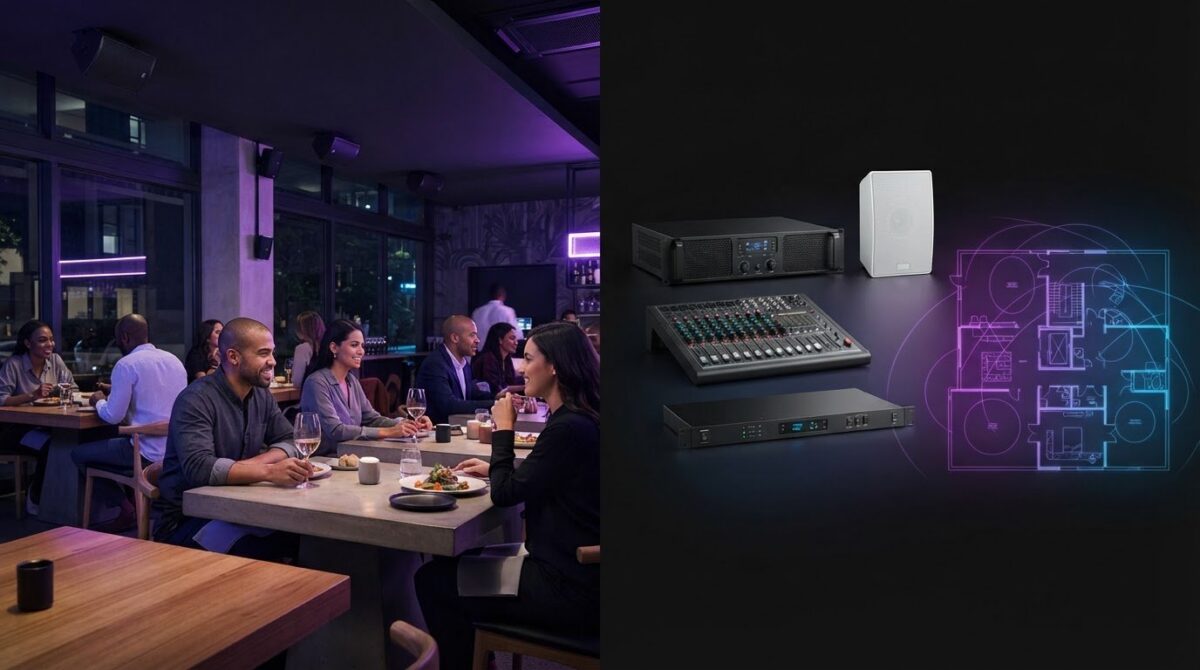
What if better restaurant sound came from turning the volume down, not up? Thoughtful restaurant sound system design starts with the guest experience: music should feel consistent across the room without competing with conversation or making service harder. If speaker placement, uneven coverage and the need for separate audio zones leave you unsure where to begin, you’re not alone.
The right setup depends on more than the speakers. Your floor plan, room acoustics and daily staff workflow all shape how the system should sound and operate. Plan around those needs first, and equipment choices become easier to compare.
This guide walks you through mapping listening areas, choosing speaker positions and deciding whether separate zones make sense. It also covers practical ways to keep sound comfortable and controls straightforward for staff. SoundXcel supplies Bose commercial audio products, including the Bose DesignMax Series, and installs Bose audio systems. Use this guidance to build a clear brief and choose an approach that fits the way your restaurant works.
Key Takeaways
- Start restaurant sound system design with the atmosphere you want guests to experience, then map how each area is used.
- Use a floor plan and the room’s acoustic conditions to identify where coverage needs attention and whether separate zones would help.
- Compare speakers, amplification, audio sources and controls by their role in the system, not by wattage alone.
- Prepare a practical project brief that records area uses, existing equipment, constraints and staff control preferences.
- Explore SoundXcel’s Bose commercial audio products, including the Bose DesignMax Series, for a professionally installed setup.
Restaurant sound system design starts with the dining experience
Restaurant sound system design is the process of planning how audio reaches each part of a venue, what it should sound like and how it will be controlled. Start with the service you want to support, not a speaker catalogue. A well-designed restaurant sound system begins with the venue’s needs, not with speaker specifications.
Those needs can change from one area to another. The dining room may call for relaxed background music that allows conversation, whilst a bar might suit a more energetic atmosphere. In a waiting area, audio could help create a welcoming first impression without dominating conversation. Consider whether preferences change between service periods, too. A space used for breakfast and evening dining may need a different sound character at different times, even if the equipment stays the same.
Room shape and finishes also influence what guests hear. Hard surfaces can reflect sound, whilst soft furnishings may absorb it. Understanding acoustics helps explain why the same audio settings can feel different in separate spaces. Note features such as high ceilings, glass partitions and open connections between areas when describing the venue.
What should a restaurant sound system achieve?
For background audio, aim for clear, balanced sound that supports the dining experience rather than competing with conversation. Decide whether the music should feel understated, warm, lively or refined, and describe that intention in everyday language before comparing equipment.
Keep atmosphere-setting audio distinct from operational needs. Announcements, staff paging or other service messages may need different priorities from music, such as clear speech or separate control. Identify which functions the system must support so they can be considered in the design rather than added as an afterthought.
Build a useful brief around the venue
Before choosing hardware, prepare a practical snapshot of how the restaurant works. Mark the main areas and note details that could affect audio coverage, programming and everyday operation:
- Room use: Note dining, bar, entrance, waiting and outdoor areas, where relevant, and how guests move between them.
- Seating layout: Sketch tables, counters, partitions and staff routes. Include seating changes that happen during service.
- Opening periods: Record when each area is in use and whether the desired atmosphere changes across the day.
- Sound preferences: Describe the intended volume and character for each area, including where music should be less prominent.
- Staff controls: Note who will adjust the sound, what they need to control and how simple those adjustments should be.
Separate essential requirements from future ideas. For example, list current dining and bar needs as priorities, then note a possible future patio or expanded service area separately. This keeps the initial brief focused while making future planning visible. A clear description of guest expectations, operating periods and staff responsibilities gives system planning a practical starting point before equipment choices enter the conversation.
Plan restaurant audio coverage by room, zone and acoustic conditions
Turn your venue brief into a simple floor plan before comparing equipment. Mark the dining room, bar, entrance, waiting area and outdoor seating, where relevant. Add tables, counters, partitions, service stations and openings between spaces. This sketch shows where guests listen, where staff move and where sound may travel from one area into another.
An audio zone is an area whose sound level can be managed independently from other parts of the venue. A zone describes control, not necessarily a separate equipment system. One connected system may serve several zones, depending on its design. Separate volume control also does not automatically mean separate music selection. Keep those functions distinct in your brief, and plan for different sources or programming only if the system supports them.
When does a restaurant need separate audio zones?
One shared sound character may suit a compact, open restaurant where guests experience the venue as a single space. Separate volume control can be useful when areas serve different purposes or operate differently. For example, the bar may remain active whilst the dining area is quieter, or an entrance may need a lower level than the main room.
Use service patterns to identify likely boundaries. Ask whether areas open and close at different times, host different activities, or need staff to adjust their sound without changing the experience elsewhere. Mark these areas on the plan as possible zones to discuss, not as a fixed equipment specification. If the whole venue shares one atmosphere and similar operating hours, extra zone controls may add complexity without clear value.
How should speaker coverage respond to the room?
The aim is comfortable, consistent listening across occupied areas, not a loud spot beneath a speaker and a quiet one at the next table. Don’t assume that one placement pattern will work in every room. A long, narrow dining space, an open-plan restaurant and a patio connected by wide doors each present different coverage questions.
Record conditions that could shape what guests hear:
- Ceiling height and shape: Note low or high ceilings, beams and changes in level.
- Reflective surfaces: Mark glass, tile, exposed brick and other hard finishes that may cause sound to bounce.
- Soft furnishings: Include curtains, upholstered seating and other materials that may absorb sound.
- Ambient noise: Identify busy service points, kitchen openings, street-facing entrances or outdoor areas where background noise may affect listening.
These are design inputs, not a formula for speaker quantity or placement. A room’s layout and finishes interact, so uncertain coverage deserves a closer assessment before equipment is selected. SoundXcel supplies and installs Bose audio products for commercial use, including the Bose DesignMax Series. Explore SoundXcel’s Bose audio solutions as you consider the equipment and installation requirements for your venue.
Compare restaurant sound system components by role, not wattage alone
A component only makes sense in relation to the rest of the system. Loudspeakers, amplification, audio sources and controls need to work together to suit the floor plan and daily operation. A power rating on its own won’t tell you whether guests will hear balanced background audio across the room, whether separate areas can be controlled, or whether staff can make simple adjustments during service. In restaurant sound system design, start with the job the system must do, then compare how each approach meets it.
Distributed audio or a simpler single-area setup?
A distributed design spreads sound across multiple listening positions, which can help provide more even coverage through a larger or irregular space. A simpler setup may suit a compact venue where one area, one sound character and one control approach are enough. Neither approach is automatically better. Compare them against the shape of your venue, how guests use each area and how much control staff need.
| Approach | Strengths | Trade-offs to consider |
|---|---|---|
| Distributed audio | Can spread sound across several listening positions and support independent level management in different areas. | Requires planning around coverage, zone boundaries and how staff will use the controls. |
| Simpler single-area setup | Can keep the system and everyday operation straightforward where one area and one control approach suffice. | May offer less flexibility if areas have different uses or need independent level adjustments. |
Think about service flow as well as room size. If a bar and dining area operate differently, independent level control may be useful. If guests move through an open space with a shared atmosphere, a single approach could be more suitable. Separate zones don’t automatically mean separate music selections or entirely separate equipment systems. Those capabilities depend on the system chosen.
What roles do speakers, amplifiers, sources and controls play?
Assess each component by its role, then check that the complete system supports the intended coverage and operation. A higher wattage figure alone doesn’t establish sound quality, even coverage or suitability for a particular room. Compatibility and system design matter.
- Loudspeakers reproduce the audio. Their placement and suitability for the space influence what guests hear at different tables. The Bose DesignMax Series is a commercial speaker range available through SoundXcel.
- Amplification drives compatible speakers. Its role is to provide appropriate power for the system, not simply to maximise output.
- Audio sources provide the content, such as music or other audio the venue needs to play. Consider how staff will select or manage that content.
- Controls let staff adjust levels or manage zones during service. Clear, accessible controls can make a capable system easier to use consistently.
Compare the complete signal path, from source to speaker, and consider how it will work in the actual venue. This shifts the decision away from isolated specifications and towards the practical result: suitable coverage, useful control and a system that fits the way the restaurant runs.

Turn the restaurant sound system design into a practical project brief
A clear brief helps turn your venue’s needs into decisions that can be reviewed and tested. Include the floor plan, how each area is used, existing equipment, preferred music sources, staff control preferences and any known constraints. Separate essential needs from future expansion ideas so the proposed system addresses current operations first.
What information should you prepare before system planning?
Make the information easy to use. Label the plan with seating areas and service spaces, then note when each area operates and how its use changes during the day. Record existing audio equipment, preferred content sources and any control method you have in mind. Mark unusual room shapes, areas with high ambient noise, and outdoor spaces exposed to weather or surrounding activity.
Use this checklist to move from preparation to a practical review:
- Prepare the floor plan. Label dining, bar, entrance, waiting and outdoor areas where relevant. Add seating, counters, partitions and staff routes.
- Describe area use. Note the purpose of each space, its operating periods and whether its sound needs to differ from nearby areas.
- Record existing equipment. List audio components already in place, preferred music sources and any connections or controls to consider.
- Capture staff preferences and constraints. Identify who will operate the system, which adjustments they need to make and any practical limits affecting installation or daily use.
- Review the requirements together. Check that the proposed approach responds to the brief, including coverage, area control and the venue’s operating needs.
- Arrange a system demonstration. Where possible, assess the proposed controls and listening experience before final acceptance, and record any changes needed.
How can you assess whether the design works in practice?
Don’t judge coverage from one convenient spot. Review the sound at representative listening positions across occupied areas, such as tables near the entrance, seats farther into the dining room and the bar. Listen for obvious differences in level or clarity, while recognising that distinct room conditions may affect the experience. Record observations by area so adjustments can be discussed clearly.
Test staff-facing controls against real service tasks. Ask the people who will use them to adjust a level or manage an area, then note whether the process feels clear and manageable. Consider how the sound should change between service periods, without assuming every room will respond identically to the same settings.
Include music-use permissions in the project review. For South African commercial music use, verify applicable requirements with the appropriate rights organisations; don’t rely on a personal listening account or treat this brief as legal advice. SoundXcel is an authorised Bose retailer and installer in South Africa. Discuss your restaurant audio project and the Bose products and installation requirements that fit your venue.
Explore a professionally planned Bose restaurant sound system with SoundXcel
A considered restaurant sound system design follows a practical sequence: define the guest experience, map the venue, identify zones, match component roles and make staff controls straightforward. Each decision informs the next. This keeps equipment choices tied to how the restaurant operates, rather than treating speakers as standalone purchases.
SoundXcel is an authorised Bose retailer and installer in South Africa, serving customers nationally. Its commercial audio offering includes the Bose DesignMax Series, a commercial speaker range that can form part of a system selected for a restaurant’s requirements. The right setup depends on the venue brief, not on assumed specifications or a one-size-fits-all approach.
How can SoundXcel support a commercial audio project?
SoundXcel supplies and installs premium Bose audio solutions for commercial requirements. A labelled floor plan, description of each area’s use and notes on staff controls give the project discussion a useful starting point. The venue’s coverage needs and operating priorities can then guide the selection and installation of relevant Bose commercial audio products.
What should happen before choosing a final system?
Bring the venue plan and operational priorities into the discussion. A suitable proposal should account for how sound needs to cover occupied areas, whether zones need independent control and how staff will manage audio during service. These requirements help keep the final choice grounded in the restaurant’s actual layout and everyday workflow.
- Guest experience: Describe the sound character you want each area to support.
- Floor plan: Mark seating, service areas, entrances and outdoor spaces where relevant.
- Zones: Identify where independent level control could help, without assuming separate music sources.
- System roles: Consider how speakers, amplification, audio sources and controls work together.
- Staff operation: Note who will use the controls and which adjustments they need to make.
Keep the brief close at hand as you review the proposed approach. Discuss how coverage will be considered across the venue, how staff will operate the system and how the controls support service. A demonstration can help your team understand the system’s operation and consider whether it aligns with the intended experience.
Bring your venue plan and priorities to SoundXcel, and explore the Bose sound system guide as a starting point for the conversation.
Shape a sound experience that grows with your restaurant
A well-planned audio system should feel like part of the venue, supporting its character without demanding attention. Treat your brief as a practical reference, not just a purchasing document. As seating, service patterns or staff responsibilities change, it can help you review whether the system still fits the way the restaurant works.
SoundXcel is an authorised Bose retailer and installer in South Africa, with commercial solutions that include the Bose DesignMax Series. Bring your priorities into the next conversation and focus on the experience you want guests and staff to have. That gives restaurant sound system design a clear direction while leaving room to consider how the system can serve the venue over time.
Discuss your restaurant audio project with SoundXcel and take the next step towards a sound experience shaped around your restaurant.
Frequently Asked Questions
How many speakers does a restaurant sound system need?
There’s no fixed speaker count for every restaurant; it depends on the room and the coverage you want. A compact, open dining room may need a different layout from a long space divided by walls or screens. Assess the design against actual seating and listening positions rather than assigning one speaker per table. For restaurant sound system design, the goal is comfortable coverage without unnecessary hot spots.
Can one restaurant sound system play different music in separate areas?
Yes, if the system supports separate audio sources for its zones. Some systems let staff adjust each area’s volume whilst playing the same source throughout. Playing different music in the bar and dining room requires source routing and controls designed for that use. Decide whether you need a shared playlist with different levels or genuinely independent content, then make that distinction explicit in the system requirements.
Are ceiling speakers or wall speakers better for restaurants?
Neither is universally better; the room determines the more suitable option. Ceiling speakers can keep equipment visually discreet, but ceiling height, construction and access affect placement. Wall speakers may suit spaces where ceiling mounting isn’t practical, though their position can influence sound direction and the room’s appearance. Compare both against the seating layout, finishes and intended coverage rather than choosing by appearance alone.
How do you keep restaurant background music from overpowering conversation?
Set music at a level that supports the room rather than competing with speech, then listen from tables across the dining area. Check it during a representative service, as conversation and kitchen activity can change the perceived balance. If guests struggle to hear one another, lower the music first instead of increasing it to cover background noise. Give staff a clear routine for adjusting levels as the room changes.
What equipment does a restaurant sound system include?
A typical system brings together loudspeakers, compatible amplification, an audio source and controls. The source provides music or other audio; amplification drives the speakers, which reproduce it around the venue. Controls let staff manage playback and levels, and a system may also need signal-processing or connection components depending on its design. Compatibility matters: a strong individual component won’t compensate for a system that doesn’t work as a whole.
Should restaurant sound system design include outdoor dining areas?
Yes, if guests use the outdoor area and you want audio there. Include patios or terraces in the coverage plan, noting how they connect to indoor spaces and whether staff should manage their level independently. Outdoor conditions and surrounding noise can affect what guests hear, so plan for the actual location and exposure. Also consider where sound may carry beyond the seating area, and keep the intended listening experience comfortable.
