

Restaurant Sound System Design: A Practical Buying Guide
October 9, 2026
Is a Home Cinema a Good Investment? A South African Guide
October 11, 2026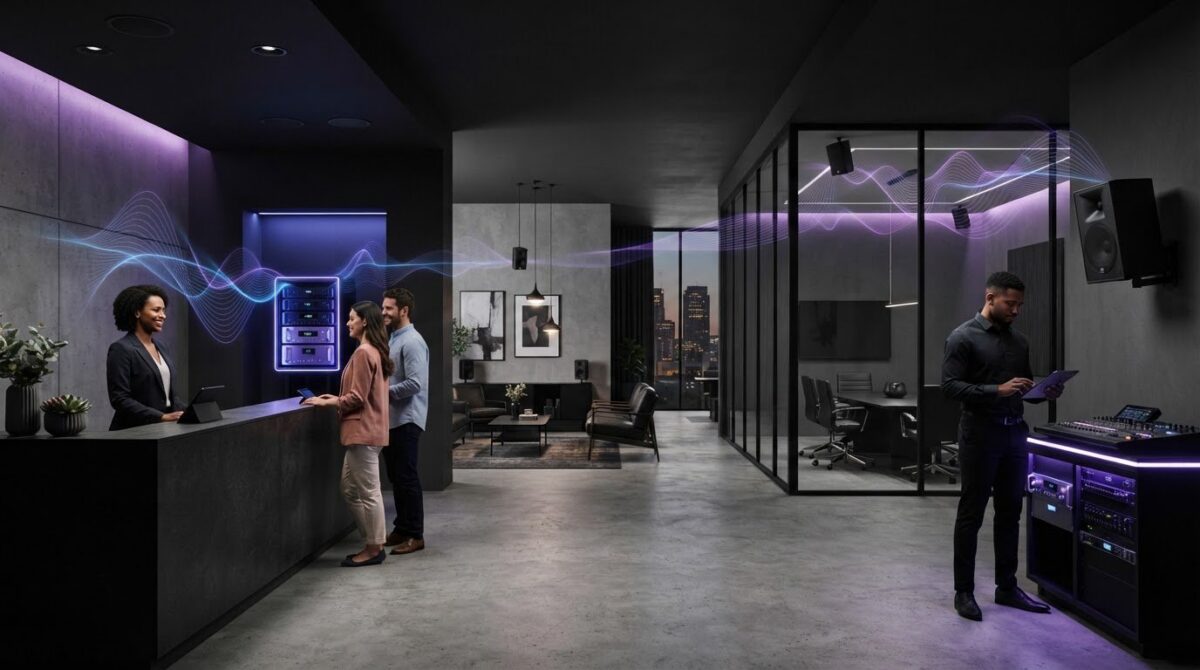
Choosing Bose commercial sound systems starts with how people use each part of your business, not with a speaker specification. Reception may need clear visitor announcements, while customer areas may need balanced background music. A system can support both, but the requirements should be defined area by area.
Starting with equipment before mapping the space can lead to a setup that does not suit daily routines. First note where people gather, what they need to hear and who will operate the audio. Those details give you a practical basis for comparing system options.
This guide covers the key decisions behind a commercial PA system, from speech clarity and music to room layout and operating needs. It also explains what to include in a project brief and how the Bose DesignMax Series may fit. SoundXcel is an authorised Bose retailer and installer in South Africa, offering the Bose DesignMax Series for commercial audio projects.
Key Takeaways
- Distinguish a public address system for announcements from a broader commercial sound system designed for varied listening needs.
- Follow the signal path from audio source through control and amplification to speakers to understand each component’s role.
- Compare Bose commercial sound systems by announcement priorities, music use, room layout and the needs of each area.
- Prepare a practical brief covering room types, listeners, audio sources and announcement requirements before reviewing options.
- Consider the Bose DesignMax Series once your business requirements are clear, and compare relevant options against your project brief.
What a Bose commercial sound system does for your business
A commercial sound system is planned around a business’s communication and listening needs. It’s defined by the job it performs, not by one speaker or piece of hardware. That job might be helping customers hear an announcement, creating a comfortable atmosphere with background music, or supporting both in different parts of a site.
When you consider Bose commercial sound systems, start with the people using the space and the way the business operates. Decide what listeners need to hear, where they need to hear it and who will use the system. Bose Corporation’s professional audio work is part of its wider company history, outlined on the Bose Corporation Wikipedia page.
When does a business need a PA system rather than background audio?
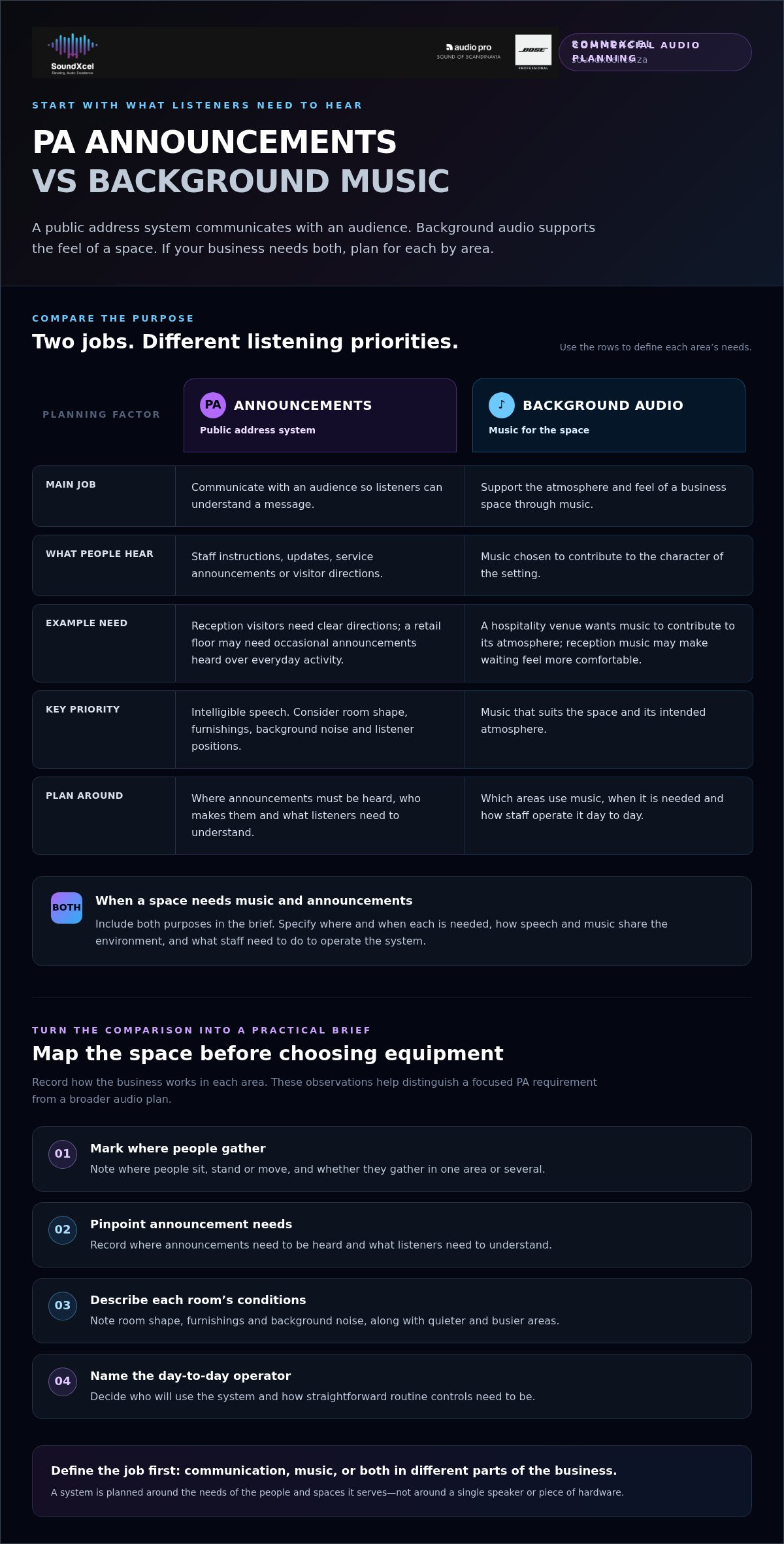
A public address (PA) system is primarily designed to communicate with an audience. If staff need to give instructions, updates or service announcements that listeners must understand, speech is the priority. A reception area might need clear visitor directions, while a retail floor could need occasional announcements that remain audible over everyday activity.
Background audio has a different purpose: it supports the feel of a space through music. A hospitality venue may want music to contribute to its atmosphere, while a reception area may use it to make waiting feel more comfortable. If your business needs both music and announcements, include both in the brief and specify where and when each is needed.
Start with the layout and audience. Note where people sit, stand or move, whether they gather in one area or several, and where announcements need to be heard. These observations help distinguish a focused PA requirement from a broader audio plan.
What should a commercial sound system improve?
First, aim for intelligible speech. Listeners should be able to follow a message without unnecessary effort. Room shape, furnishings, background noise and listener positions can all affect how well a voice carries. Describe the conditions in each area so the system plan reflects the real environment, not just a floor plan.
Music serves another purpose. It can shape the mood of a retail floor or hospitality setting, but it should not be treated as a substitute for clear announcements. In a mixed-use space, consider how music and speech will share the environment and what staff need to do to operate the system day to day.
Use three practical measures to describe the outcome you want:
- Fit for purpose: Match the sound to the main tasks, whether communication, music or both.
- Clear operation: Decide who will use the system and how straightforward routine controls need to be.
- Planned coverage: Identify the areas and listeners the audio needs to serve, including quieter and busier zones.
A useful brief makes these priorities visible before equipment is selected. It gives the system plan a clear measure of success: sound that supports the business, suits its spaces and works for the people who rely on it.
How a business PA system works: sources, control and speakers
A business PA system carries audio from its source to the people who need to hear it. The signal path is straightforward: a source provides the sound, control equipment manages the signal, amplification supplies the drive needed by compatible speakers, and the speakers reproduce the audio in the space. Depending on the design, components may be separate or combined.
The source provides audio, control equipment shapes or routes it, amplification drives compatible speakers, and the speakers deliver sound to listeners. Sources might include a microphone for announcements or an audio player for music. To plan the signal path, list what needs to be heard, where listeners are and who will operate the equipment.
For businesses exploring Bose commercial sound systems, the Bose Professional official website provides information about Bose’s professional audio division and commercial products. Use product documentation to understand the specific equipment in a proposed design, rather than assuming every system has the same components or arrangement.
What do amplifiers and audio processors do in a business system?
An amplifier increases an audio signal so it can drive compatible speakers at a suitable level. A digital signal processor (DSP) is equipment or software that processes audio signals. Its role depends on the system design, so check the relevant product documentation for its specific functions. The selected speakers, amplifier and processing equipment need to work together as a planned system.
Where do ceiling and wall-mounted speakers fit?
Ceiling and wall-mounted speakers are different placement choices, not automatic answers for every room. Ceiling placement may suit a layout where listeners are spread beneath the speakers. Wall placement may be appropriate where the room plan or audience positions call for sound from the perimeter. The right approach depends on the space, intended listening experience and selected equipment.
Before deciding on placement, note the room’s shape, ceiling height, fixed furniture and typical listener positions. A long retail floor presents a different planning challenge from a compact reception area. Record where staff make announcements, where customers spend time and whether the room has quieter or busier areas. These details connect system planning to the way the space is actually used.
Consider day-to-day operation as well. Who will select a source or make an announcement? How often will audio use change? Clear answers help define the controls and signal path that make sense for the business. Keep the brief focused on the desired outcome, then match compatible components to it. SoundXcel’s Bose retail and installation services support this needs-led process. Explore Bose audio solutions from SoundXcel.
Compare commercial sound system options by business use and space
Compare systems against the work they need to do, rather than a headline specification in isolation. An announcement-led office, a music-focused hospitality venue and a busy retail floor can have different priorities, even if their spaces look similar on a plan. Use the framework below to clarify your brief before comparing equipment.
| Business setting | Announcement priority | Music use | Room layout and operation |
|---|---|---|---|
| Retail | Consider how staff and customers will hear service or operational announcements across the floor. | Set the desired customer atmosphere and consider how music sits alongside everyday activity. | Note open sales areas, counters and quieter corners. Keep routine controls clear for the staff who use them. |
| Hospitality | Identify where spoken messages need to be understood, such as service points or shared areas. | Balance music’s contribution to the atmosphere with the need for speech to remain clear. | Record distinct room types and how guests use them. Consider whether the brief differs between dining, waiting or social spaces. |
| Office | Decide where announcements support daily communication and which listeners need to hear them. | Establish whether music has a role in shared spaces, and where it would not suit the work taking place. | Separate shared areas from meeting spaces and consider who operates audio during a typical working day. |
Which business audio priorities matter in retail, hospitality and offices?
Use the table to identify the primary purpose in each area, then note any secondary needs. A retail brief may put customer experience and staff communication side by side. Hospitality often needs a balance between atmosphere and spoken interaction. In an office, shared areas and meeting spaces may call for different approaches. Treat these as starting points, not fixed rules: the actual layout and daily activity should shape your requirements.
A brief for one area can focus on that room’s audience, audio use and operating routine. Planning for several areas calls for a wider view. Map each area separately, record what listeners should hear there and note where requirements differ. This clarifies the scope without assuming that particular equipment will provide independent control between areas.
How should buyers compare Bose DesignMax with other commercial options?
SoundXcel offers the Bose DesignMax Series for commercial audio projects. Compare it with other options using the same written brief: intended use, room type, listener positions, announcement requirements and operating priorities. Then assess relevant model features against current Bose product documentation. Avoid drawing conclusions from a single specification, since the fit depends on how the complete system is designed for the project.
Before selecting equipment, make sure the proposed design accounts for the actual space and its different listening demands. Equipment choices need to be considered as part of a project-specific system design, including how the components work together. A clear comparison keeps the decision anchored to business needs rather than treating a product range as a complete solution on its own.
Plan your Bose commercial sound system with a practical buying checklist
A clear project brief turns everyday audio needs into useful system requirements. Before comparing Bose commercial sound systems, gather details about the spaces, listeners and tasks the system must support. Use the brief as a reference when reviewing proposed designs, and to spot missing decisions early.
What information should you gather before planning a business PA system?
Walk through each area and note how it is used during the day. Record whether people need announcements, background music or both, which audio sources are involved and who will operate the system. Include practical details such as where staff need to use controls, along with any planned changes to the space or its use.
Use this sequence to organise your brief:
- Define the use cases. List the tasks audio must support, from routine announcements to music during customer-facing hours.
- Map the spaces. Record room types, layouts and how people move or gather in each area. Note differences between shared, quieter and busier spaces.
- Describe the listeners. Identify who needs to hear audio in each space, including staff, customers, visitors or meeting participants.
- List audio sources. Note the microphones, music sources or other inputs the business expects to use. Include who needs access to each one.
- Set operating preferences. Describe the controls staff need, who is responsible for day-to-day operation and how simple routine use should be.
- Record future changes. Flag planned renovations, changes in room use or other requirements that could affect the brief.
How can you assess a proposed system against your brief?
Review the proposal area by area. Check that it responds to each listed use case, identifies the intended audio sources and explains how the selected components relate to the space. For model-specific claims, look for explanations grounded in current product documentation. If an item in the brief has no clear response, record it as unresolved rather than assuming it is covered.
Compare the design with the needs of the people who will use it. A proposal may address the equipment list but leave practical questions about operation unanswered. Check that it reflects how staff will select sources or make announcements, and that its assumptions about the rooms match the information you provided. For broader consumer-system considerations, The Ultimate Guide to Choosing a Bose Sound System in South Africa offers a related perspective. A commercial brief still needs to focus on the business’s spaces and working routines.
Keep the checklist alongside the proposal and mark each requirement as addressed or unresolved. This makes it easier to discuss the design in specific terms and refine the brief before proceeding. SoundXcel’s Bose retail and installation services support a needs-led discussion about a tailored commercial audio solution. Discuss your commercial audio requirements with SoundXcel.
Explore Bose DesignMax commercial sound systems with SoundXcel
Once you’ve defined what each space needs, consider equipment in context. SoundXcel offers the Bose DesignMax Series for businesses exploring a commercial Bose audio solution. Begin with the project brief: the spaces involved, how audio will be used and what listeners need from it.
This approach keeps the discussion grounded in your business. A system for one shared space may have different requirements from a system planned for several distinct areas. Notes on announcements, music, audio sources and daily operation give the design discussion a useful starting point. Product choices should be based on project requirements and current Bose documentation, not assumptions about a range or an individual model.
How does SoundXcel help businesses consider Bose DesignMax?
SoundXcel is an independent authorised Bose retailer and installer in South Africa. Its Bose retail and installation services support a needs-led buying conversation, using your documented spaces and intended audio uses to frame the options. Bring practical details too, such as who will operate the system and how people use each area. This helps connect product guidance to the business brief, rather than treating equipment alone as the solution.
As you refine your requirements, The Ultimate Guide to Choosing a Bose Sound System in South Africa may also be useful. It provides broader Bose-system context. For a commercial project, keep your own room notes and business use cases at the centre of the discussion.
What is the next step towards a business audio solution?
Prepare a concise overview before making an enquiry. Include the types of spaces involved, who needs to hear audio in each one, whether the system is for speech, music or both, and which sources staff expect to use. Note how the business operates during a typical day, who needs access to the controls and whether changes to the space are planned.
With those details in hand, you can discuss how Bose DesignMax may fit the project and what a tailored system design needs to address. Your brief gives SoundXcel a practical starting point for discussing the commercial Bose range and your business requirements.
Explore Bose commercial audio with SoundXcel.
Turn your audio brief into a confident next step
Your sound system should support the way your business works now and give you a clear basis for decisions as the project develops. Keep room notes and operating priorities together. They can help you assess proposed choices, explain what matters to your team and focus on the experience you want customers and staff to have.
A Bose commercial sound system plan is more than a list of equipment. It should respond to your space, listeners and daily use. With those needs documented, you can explore the Bose DesignMax Series with SoundXcel, an independent authorised Bose retailer and installer in South Africa. SoundXcel also provides Bose-specific repair services.
Start by describing the spaces, intended uses and people who will operate the system. Then explore Bose commercial audio with SoundXcel and discuss an approach shaped around your business.
Frequently Asked Questions
Can a business PA system also play background music?
Yes. A commercial system can be planned for announcements, music or both, depending on its design and intended use. A reception area, for example, might play music during normal hours and need clear spoken directions for visitors. Note whether speech and music are needed in the same places and at the same time. This helps define your Bose commercial sound systems requirements without assuming that every setup supports every source or control method.
How many speakers does a business sound system need?
There is no standard speaker count for every business. The answer depends on the spaces, room layout, listener positions and what people need to hear. A room with movable partitions, for example, may be used differently from one with a fixed layout. Map the areas the system must serve and describe how each is used before settling on a quantity. That gives the system plan a practical starting point.
Is Bose DesignMax suitable for every type of business?
No single range should be assumed to suit every business. Bose DesignMax is a commercial range offered through SoundXcel, and its relevance depends on the project’s spaces, audio priorities and operating needs. A quiet office, a busy shop and a hospitality venue can place different demands on a system. Outline the intended uses first, then assess relevant DesignMax options against current Bose product information and the project requirements.
Do I need an amplifier for a commercial sound system?
It depends on the system architecture and the speakers selected. Some designs use a separate amplifier to drive compatible speakers; other configurations may differ. Do not assume a particular arrangement based on the speaker type or product name alone. Review how the components work together in the proposed system and check the relevant product documentation. This clarifies whether amplification is included in the design or needs to be considered separately.
What is the difference between a PA system and a commercial sound system?
A PA system generally focuses on making speech or announcements audible, while a commercial sound system can cover a wider mix of business audio needs, including music and communication. The terms can overlap. A business may use a PA for spoken updates and also want music in customer areas. Describe the job the audio needs to do, rather than relying only on the label, to make a system proposal easier to assess.
Can one sound system serve several areas of a business?
A system can be designed for several areas, but its capabilities depend on the selected equipment and overall design. Decide whether each area should hear the same audio or has different needs. A shared workspace and a customer-facing area, for example, may have different expectations. Do not assume a multi-area design includes independent controls or specific zone functions. Set out the intended behaviour for each space and assess it against product documentation.
What should I prepare before enquiring about a Bose commercial sound system?
Prepare a short project note covering the spaces involved, the audio each needs and who will operate the equipment. Add the sources you expect to use, such as microphones or music playback devices, and note practical access or daily-use preferences. A simple floor plan can show how rooms connect and where people gather. These details give SoundXcel a useful starting point for discussing relevant Bose commercial options without requiring you to choose models first.
