

Bose Smart Home Sound System: Build a Connected Audio Experience
October 7, 2026
Restaurant Sound System Design: A Practical Buying Guide
October 9, 2026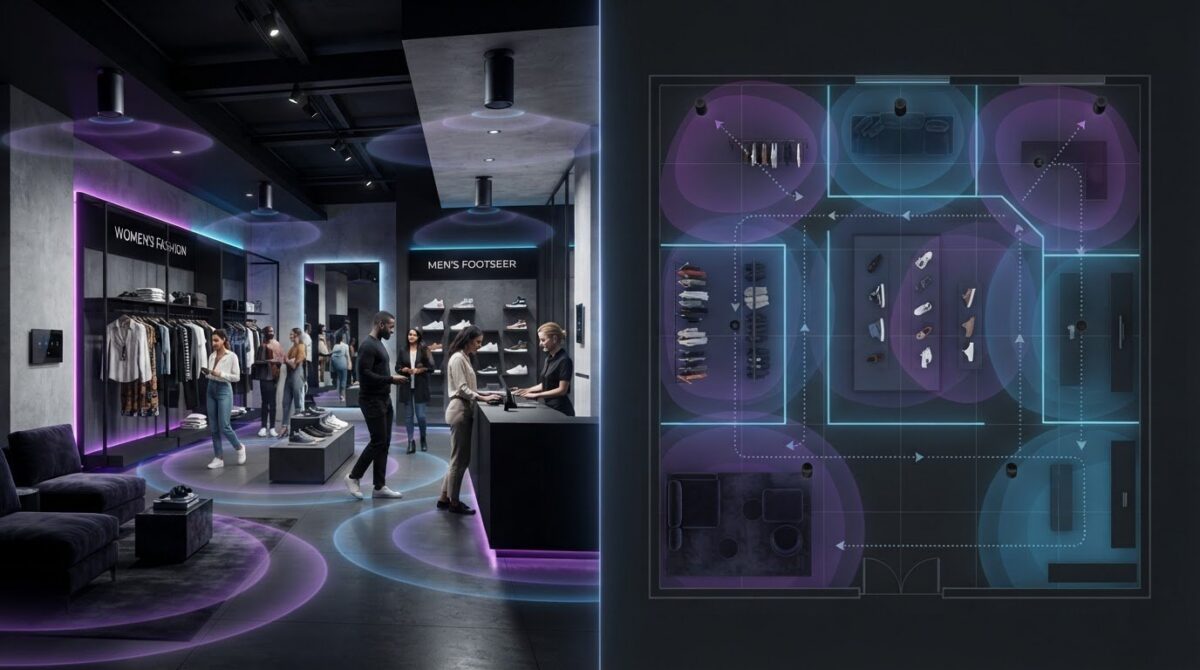
A well-planned background music system for retail stores depends as much on how sound travels as on what plays through the speakers. The aim is consistent, comfortable coverage that supports the shopping experience without overpowering conversation, and a system staff can manage throughout the day.
To choose the right setup, plan playback, coverage, controls and music-use permissions together. Start with the floor plan and daily routines, then decide whether the shop needs separate zones, what controls staff need and how the music source will connect.
This guide explains how to match speaker placement and zoning to your floor plan, compare practical system components and consider music-use permissions separately from audio equipment. SoundXcel is an independent authorised Bose retailer and installer in South Africa, with commercial audio products including the Bose DesignMax Series. Use your shop’s coverage and control needs to guide the selection.
Key Takeaways
- Plan a background music system for retail stores around comfortable, even coverage, not simply making music audible everywhere.
- Understand how the music source, controls, amplification, speakers and connections work together, and why system requirements vary.
- Use your floor plan, ceiling height, partitions and customer flow to guide speaker placement and decide whether separate zones are useful.
- Assess coverage, staff workflows, playback controls, source compatibility and future changes before choosing equipment.
- Consider the Bose DesignMax Series against your shop’s coverage and control needs, and keep music-use permissions distinct from audio hardware.
What should a background music system for retail stores achieve?
A retail music system should do more than make songs audible. It should create a consistent listening experience that supports the shop’s identity, customer journey and daily operation. Set a clear brief before comparing equipment: room size alone does not show where sound will carry well or where staff need quieter conditions.
A retail background music system is the audio equipment and playback controls planned to deliver music in a commercial space. Speakers, amplification and connections handle sound; a playback source supplies the music, and controls let staff manage it. Streaming and music-use permissions are separate considerations. Neither is the audio hardware itself.
How should music support the retail experience?
Start with the atmosphere you want customers to experience, then consider how they move through the shop. A calm, restrained soundtrack may suit a browsing area, whilst a more energetic selection could fit a lively product section. Aim for a coherent experience rather than a different sound in every corner. This overview of background music’s history and effects offers useful context.
Comfort matters more than maximum volume. Customers should be able to speak with staff and hear useful announcements without competing with the soundtrack. Staff spend long periods in the space too, so consider whether the chosen music and level remain comfortable throughout a trading day. Base the listening brief on what happens in each area, not only on the mood you want to create.
What should retailers decide before comparing systems?
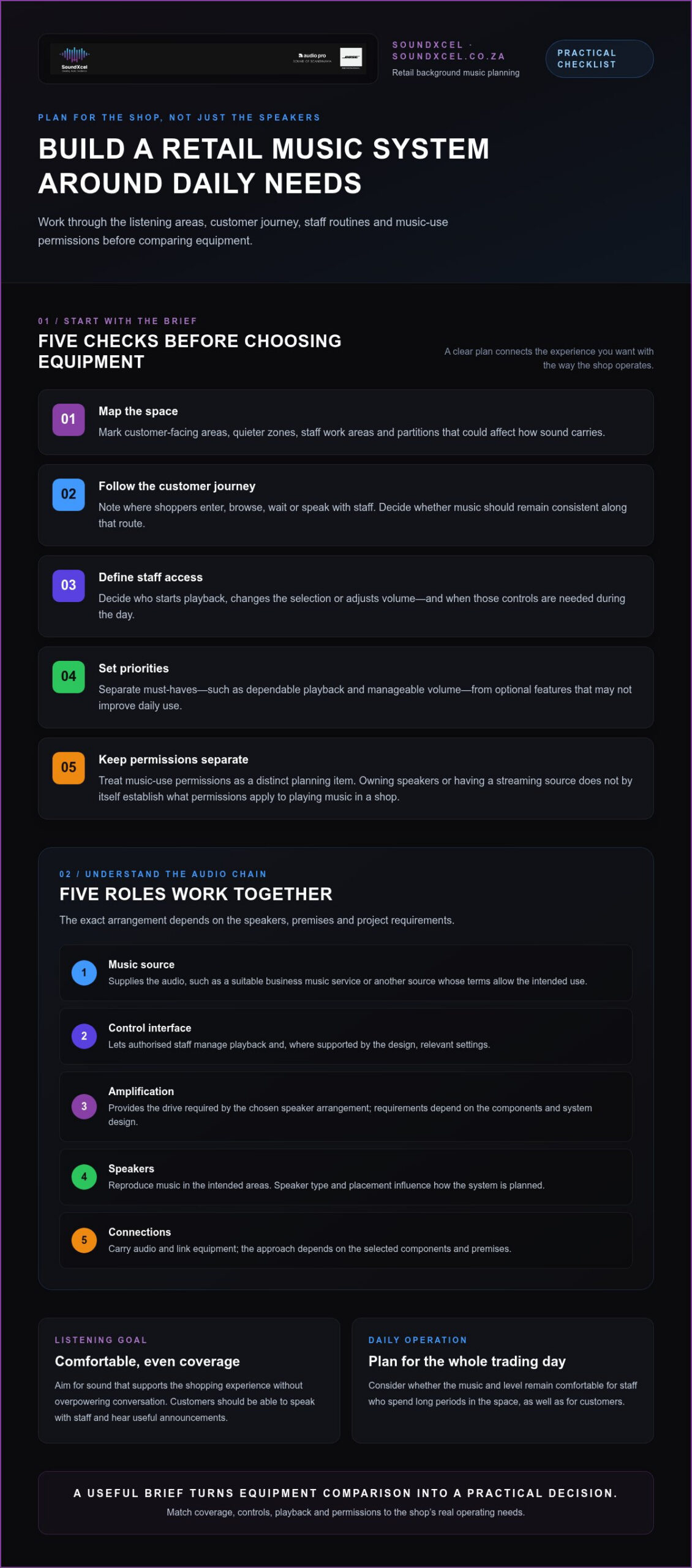
Map the listening brief first. Mark where music should play, where it should be quieter or absent, and who needs to adjust playback. A fitting room, checkout and browsing area may have different requirements. Making those distinctions early helps you identify essential capabilities and avoid paying attention to features that do not improve daily use.
- Map the space: Mark customer-facing areas, quieter zones, staff work areas and partitions that could affect sound.
- Follow the customer journey: Note where shoppers enter, browse, wait or speak with staff, and decide whether music should stay consistent along that route.
- Define staff access: Decide who starts playback, changes the selection or adjusts volume, and when those controls are needed in the daily routine.
- Set priorities: Separate must-haves, such as dependable playback and manageable volume, from optional features that may not improve the experience.
- Keep permissions separate: Treat music-use permissions as a distinct planning item. Owning speakers or having a streaming source does not, by itself, establish what permissions apply to playing music in a shop.
With these decisions in place, you can assess a background music system for retail stores against real operating needs. A useful brief connects the experience you want to practical requirements, giving equipment comparisons a clear purpose.
Which components make up a retail background music system?
A retail audio setup works as a chain. A music source supplies audio, a control interface lets staff manage playback, amplification drives speakers where required, and connections carry the signal between components. The precise arrangement depends on the speaker type, premises and project requirements.
The source provides the music, the controls manage playback, amplification supplies power where needed, speakers reproduce the sound, and connections link the system together. Understanding these roles helps you compare equipment without confusing the installed audio system with the service or software that provides music.
How do speakers, amplification and controls work together?
Think of the system as a path from music to listening area. The source might be a device or a business music service. Its signal passes through the relevant connections and equipment before reaching the speakers. The chosen speakers and system design determine what amplification is needed. Some setups use separate amplification, whilst others may handle this differently.
Controls shape daily use. Depending on the system, staff may use an interface to start or pause playback, choose music or adjust volume. Decide who needs access and how straightforward the routine should be, from opening the shop to changing the atmosphere during trading. Bose DesignMax is a commercial audio range to consider as part of an equipment plan, not a music source or licensing service.
- Music source: Supplies the audio, such as a suitable business music service or another source whose terms allow the intended use.
- Control interface: Gives authorised staff a way to manage playback and, where supported by the design, relevant settings.
- Amplification: Provides the drive required by the chosen speaker arrangement. Requirements depend on the components and project design.
- Speakers: Reproduce the music in the intended areas. Their type and placement influence how the system is planned.
- Connections: Carry audio and link equipment. The connection approach depends on the selected components and premises.
How should retailers think about music sources and permissions?
A personal streaming subscription may not grant permission for playback in a shop. Review the terms that apply to the service and choose a source intended for business use where appropriate. Treat permissions as a separate consideration: audio equipment does not provide a music catalogue or rights to play it publicly.
For a retail space in South Africa, include applicable music-use permissions in your planning. Keep this separate from selecting a streaming service or installing speakers. The source determines what music is available; permissions concern whether and how it may be used in a commercial setting.
Mapping these roles makes system comparisons more precise. To consider commercial audio equipment against your coverage and control needs, explore SoundXcel’s Bose DesignMax audio options as part of your project planning.
How do speaker layouts and zones compare in retail shops?
Speaker layout determines how evenly music reaches customers and how easily the system can adapt to different parts of the shop. A distributed arrangement uses several installed speakers to spread sound across an area. Fewer, localised sound sources may suit a compact or clearly defined space, but can make music feel louder near the source and less present further away.
Speaker quantity depends on the store layout and the coverage you need, not on a universal rule. Open plans, partitions, ceiling height and the customer route all affect where sound travels. Plan around how the space is used instead of choosing a speaker count before assessing it.
When does a retail store benefit from separate audio zones?
Separate zones can help when departments have different sound needs or operating schedules. For example, a shop might want music in its browsing area but a quieter environment at a service counter. One zone may be a better fit if the customer-facing space has a consistent purpose and staff benefit from shared playback.
Focus on practical differences: does one area need its own volume or playback routine? If not, extra zones may add control complexity without improving the experience.
| Approach | How it works | Consider it when |
|---|---|---|
| One playback area | Music is managed together across the intended space. | You want a straightforward, consistent soundtrack and areas share similar needs. |
| Multiple independently managed zones | Different areas can be managed separately, according to the system design. | Departments have distinct sound levels, routines or operating schedules. |
Which layout factors affect speaker placement?
Start with the premises. A high ceiling can change how sound reaches listeners; partitions may interrupt its path, whilst shelving can create areas where sound is less clear. Hard, reflective surfaces may also affect how music is heard. These conditions make a simple “one speaker per area” assumption unreliable.
Distributed installed speakers can support broader, more even coverage when positioned for the space. Localised sources may be simpler in a small, open area, but relying on one loud source to cover distant corners can create a distracting near-speaker zone alongside quieter spots.
Map the ceiling, room shape, shelving, reflective surfaces and customer flow before deciding on placement. This can help identify potential coverage gaps and areas where sound may feel too prominent. The layout should respond to those conditions rather than assume the same arrangement will suit every shop. Use the assessment to compare a background music system for retail stores against the way customers and staff actually move through the premises.
What should you check before choosing a retail music system?
Compare systems against a written brief, not just a product list. A clear checklist helps you assess coverage, staff usability, installation needs and music-use permissions as separate decisions. It also shows whether a proposed setup fits how your shop operates now and how the space may change.
Which questions belong on a retail audio checklist?
Work through these points before reviewing equipment. Record practical details such as opening routines and areas where staff need to speak with customers. Those notes provide a useful starting point for the project.
- Map the layout and daily routine. Note customer areas, quieter spaces, opening hours and staff workflows. Mark entrances, tills, service points, stock areas and locations where music should be reduced or absent.
- Assess coverage. Identify where sound should be consistent and where room shape, ceiling height or shelving could affect it. Consider how the proposed layout addresses gaps and overly prominent sound.
- Decide whether zones are needed. Consider whether departments have genuinely different volume needs, playback schedules or routines. Keep the arrangement simpler if the customer-facing space can share one soundtrack and control routine.
- Choose a control approach. Decide who can start, pause or adjust playback, and when staff need access. Consider whether controls should be central or managed through an interface that suits the team’s normal tasks.
- Check source compatibility. Establish how the intended music source connects to the audio system and whether staff can manage it as required. Treat source selection separately from the speakers and other installed equipment.
- Plan for future changes. Note possible shop refits, new departments or changes to customer flow. A proposal should explain how these plans affect system design rather than assume the current layout will remain fixed.
- Record installation constraints and permissions. Include ceiling construction, access for wiring and relevant premises considerations in the brief. Separately identify the music-use permissions that apply to your business; the audio installation itself does not settle those permissions.
How can you assess an audio proposal?
Look for a clear account of the intended coverage, selected system components, control method and assumptions about the premises. The proposal should connect its equipment choices to your layout and staff routine instead of relying on a generic speaker count. Check that music-source arrangements and applicable permissions are treated as distinct matters.
For broader guidance on comparing Bose equipment, the Bose sound system buying guide can help frame your selection. Once you’ve documented your requirements, explore SoundXcel’s Bose audio solutions as a next step towards a project-specific system discussion.
How can SoundXcel help you plan a Bose DesignMax retail system?
A retail audio decision should start with the experience you want to create and the practical needs of your premises. SoundXcel is an independent authorised Bose retailer and installer in South Africa. Its commercial audio range includes the Bose DesignMax Series, which retailers can consider when planning an installed system around their space and daily operation.
Why consider Bose DesignMax for a retail environment?
Bose DesignMax is a commercial audio range to assess against your coverage, zone and control requirements. Start with the areas that need sound, how consistently it should reach them and whether different parts of the shop need independent management. These priorities help shape a useful equipment discussion instead of relying on a product name alone.
The right fit depends on the project. Store layout, ceiling and premises conditions can all influence the system plan, as can the way staff manage playback. Keep comparisons at the range level unless model-specific details have been verified against current manufacturer information. This keeps the focus on matching the equipment to the brief without assuming every model or configuration suits every shop.
What are the next steps towards a considered system?
Prepare a short outline before discussing your project. Include the details that affect system planning:
- Store areas: Note customer-facing spaces, quieter areas and departments with different listening needs.
- Coverage and zones: Describe where sound should reach and whether separate areas need independent playback or volume management.
- Daily controls: Explain who manages playback, what access staff need and how music fits into opening and trading routines.
- Premises details: Record relevant layout, ceiling and installation considerations, along with any planned changes to the space.
These details give SoundXcel a practical starting point to guide a Bose audio solution around your project requirements. Keep your music source and applicable music-use permissions as separate planning matters: the audio system addresses sound delivery, not the service or permissions for playing music.
For broader Bose selection context, use the Bose sound system buying guide to compare considerations across system types. When you’re ready to discuss your retail requirements, discover Bose audio solutions at SoundXcel.
Turn your retail audio brief into a confident next step
Give your next decision a clear purpose. Before choosing a background music system for retail stores, translate what matters most in your shop into a practical brief: the atmosphere you want to create, the areas that need sound and how the system should fit into the working day. A marked-up floor plan and notes about staff routines can make the discussion more focused.
You do not need to settle every technical detail alone. Start with the outcome you want for customers and staff, then use it to assess each system choice. The right solution should make sense for your premises, not simply look impressive on a product list.
SoundXcel can guide you through Bose audio options, including the DesignMax Series, with your retail requirements in mind. A considered brief is a strong starting point for creating a comfortable, cohesive sound experience in your shop.
Frequently Asked Questions
Is a background music system worthwhile for a small retail store?
Yes, if music supports the shop’s atmosphere without adding unnecessary complexity. A compact boutique with one customer area may need only a straightforward setup, whilst a small shop with a separate consultation room could have different listening needs. Consider how customers experience the space and whether staff can manage playback easily. The value comes from a considered fit, not from installing more equipment than the premises require.
Can a retail background music system work without an internet connection?
Yes, provided the chosen source and equipment support playback without internet access. For example, a locally stored music library may work through a compatible connected device, whilst an online streaming service generally needs a connection to load or stream tracks. Some apps may also need internet access for sign-in or account functions. Confirm the offline playback method in advance, and make sure the music source’s terms cover the intended commercial use.
Can one retail audio system play announcements as well as background music?
Yes, if the system is designed with compatible announcement equipment and controls. A microphone or paging input may let staff make a spoken message over the audio, but the arrangement depends on the components selected. Consider whether announcements should interrupt music, which areas should hear them and who can make them. Include these needs in the system brief before choosing equipment.
Can I use my personal music streaming subscription in a shop?
Do not assume a personal subscription permits music playback in a commercial space. Service terms can distinguish private listening from business use, so review the terms that apply to your account. Also include applicable music-use permissions for your South African business in your planning. A business music service may offer a more suitable source, but its subscription and the permissions relevant to your shop are separate matters.
Are ordinary home speakers suitable for a retail store?
They may suit a small, simple space, but suitability depends on how the speakers will be used and installed. Consider whether they can deliver the coverage you need, connect to the chosen source and operate through your normal trading routine. A setup that works in a living room may not be practical across a shop floor or several areas. Compare equipment for its intended use, not just how it sounds at home.
How can I keep background music from interfering with customer conversations?
Keep music at a level that allows customers and staff to speak comfortably. During a quiet period, play a typical track and test a normal conversation at the counter and in the busiest browsing area. Listen from more than one position, including near and farther from the speakers. If speech feels masked, lower the level or review speaker placement rather than turning up the volume elsewhere.
Do retail stores need separate music zones?
No, not every shop needs separate zones. A single open sales floor with one soundtrack and one operating routine may be easier to manage as one area. Separate control can help if, for example, a café corner and a quieter fitting area need different playback or schedules. Before adding zones, identify who will manage them and whether the distinction makes daily operation simpler for staff.
Planning a retail audio system? Explore SoundXcel’s Bose audio solutions and take the next step towards a system that fits your shop.
