


Short throw vs long throw projector: which suits your room?
October 14, 2026
Epson Projector for Outdoor Cinema: Your 2026 Guide
October 16, 2026
Could a repair that seems straightforward still affect the sound and performance you value in your Bose equipment? When searching for an authorised Bose repair agent, you want support that understands Bose products, not a generic approach. If your headphones or home audio system develops a fault, clear information about the symptoms and model can help get the repair enquiry off to a useful start.
SoundXcel provides specialist Bose repair services to customers across South Africa. This guide explains what Bose-specific repair support involves, what equipment details and fault information to prepare, and how to decide what to do after an assessment. You’ll find practical steps for describing an issue and approaching a repair enquiry with confidence.
Key Takeaways
- Learn what Bose-specific repair support involves and why the equipment model matters.
- Understand why assessment findings should guide repair or replacement decisions, rather than assumptions about the fault.
- Compare the symptoms, overall condition and assessment findings when weighing your options.
- Prepare for an enquiry by noting the model and describing when the fault occurs.
- Find out how to approach SoundXcel for Bose repair support from anywhere in South Africa.
Authorised Bose repair agent: what should owners expect?
A fault can interrupt the sound and everyday use you rely on, whether it affects headphones, a speaker or a home audio system. A helpful first step is to identify the equipment and explain what has changed. That gives a repair specialist a clearer starting point than a general description such as “it isn’t working”.
People searching for an authorised Bose repair agent are usually looking for support that is specific to their Bose product. SoundXcel provides Bose-specific repair services in South Africa. The product model and its reported behaviour are central to describing the issue and considering what to do next.
For a brief look at an earpad change, watch this video. It shows an accessory swap, not a repair assessment or instructions for diagnosing equipment faults.
Bose-specific repair support starts with the particular product and the fault you’ve observed. An assessment can then inform the next step, without assuming that every fault has the same cause or outcome. A symptom alone rarely identifies the problem, so describe what the equipment does rather than trying to name a faulty component. For background on the manufacturer, explore Bose Corporation’s history and products.
What does an authorised Bose repair agent do?
A Bose repair enquiry should begin with the product and its behaviour. The model helps identify the equipment, while a clear description explains the concern. When looking for an authorised Bose repair agent, focus on Bose-specific support and give the repair specialist enough detail to understand what you’re experiencing. SoundXcel repairs Bose equipment, giving South African owners a specialist route to discuss an issue.
When should you seek Bose repair support?
Consider seeking an assessment if the equipment behaves differently from usual, operation keeps cutting out, or it no longer performs as expected. These signs don’t establish a cause on their own. Note what you observe and when it happens, such as during use, after connecting the equipment, or only intermittently. This symptom-led record provides a useful starting point without guesswork or an attempt to diagnose the equipment yourself.
Before making an enquiry, gather the model name or number if available and describe the issue in plain language. Include what still works, what has changed, and whether the behaviour is consistent or occasional. You don’t need to identify the faulty component. A concise, accurate account helps keep the initial conversation focused on your equipment and its symptoms.
Why Bose-specific assessment matters for premium audio equipment
A familiar listening experience depends on equipment working as intended. Bose products vary by model, and their components and audio processing can differ too. That’s why a symptom rarely tells the whole story. A change in sound or operation is a reason to assess the equipment, not proof of a particular fault.
A model-specific assessment considers what the equipment is doing alongside the product in question. This helps inform the repair discussion without promising a particular result. It keeps the conversation grounded in the equipment and its observed behaviour, rather than assumptions based on a similar-looking device.
How can a fault affect the listening experience?
You may notice that sound seems different, playback is interrupted, or the equipment no longer responds as expected. These are observations, not diagnoses. Similar symptoms can have more than one possible explanation, and the cause may not be apparent from a brief description alone. Note what changes, whether the issue comes and goes, and what you were doing when it occurred. This gives an assessment useful context without requiring you to identify a component or make a technical judgement.
Why avoid assumptions about generic repairs?
A repair method or replacement part needs to suit the particular equipment. A solution that works for one device may not suit another, so avoid treating all audio products as interchangeable. Bose-specific repair support keeps attention on the product and the issue you’ve reported, rather than assuming that a repair approach will apply across different models.
Assessment also helps separate “What might be causing this?” from “What should happen next?” The answer may depend on the equipment’s condition and the findings, so it’s premature to assume that repair is suitable or that replacement is necessary. Gather the relevant information first, then use the assessment to inform the options.
Specialist handling is about considering the reported fault in context, not promising that every unit can be restored. SoundXcel’s Bose-specific repair service gives owners in South Africa a focused way to discuss equipment concerns. You can explore SoundXcel’s Bose repair support.
Before making an enquiry, keep your description factual: what has changed, how often it happens, and whether the behaviour is consistent. Avoid drawing conclusions from a single episode. Clear observations help distinguish an occasional interruption from a recurring problem, while the model details keep the discussion relevant to your equipment.
Bose repair or replacement: how to compare your options
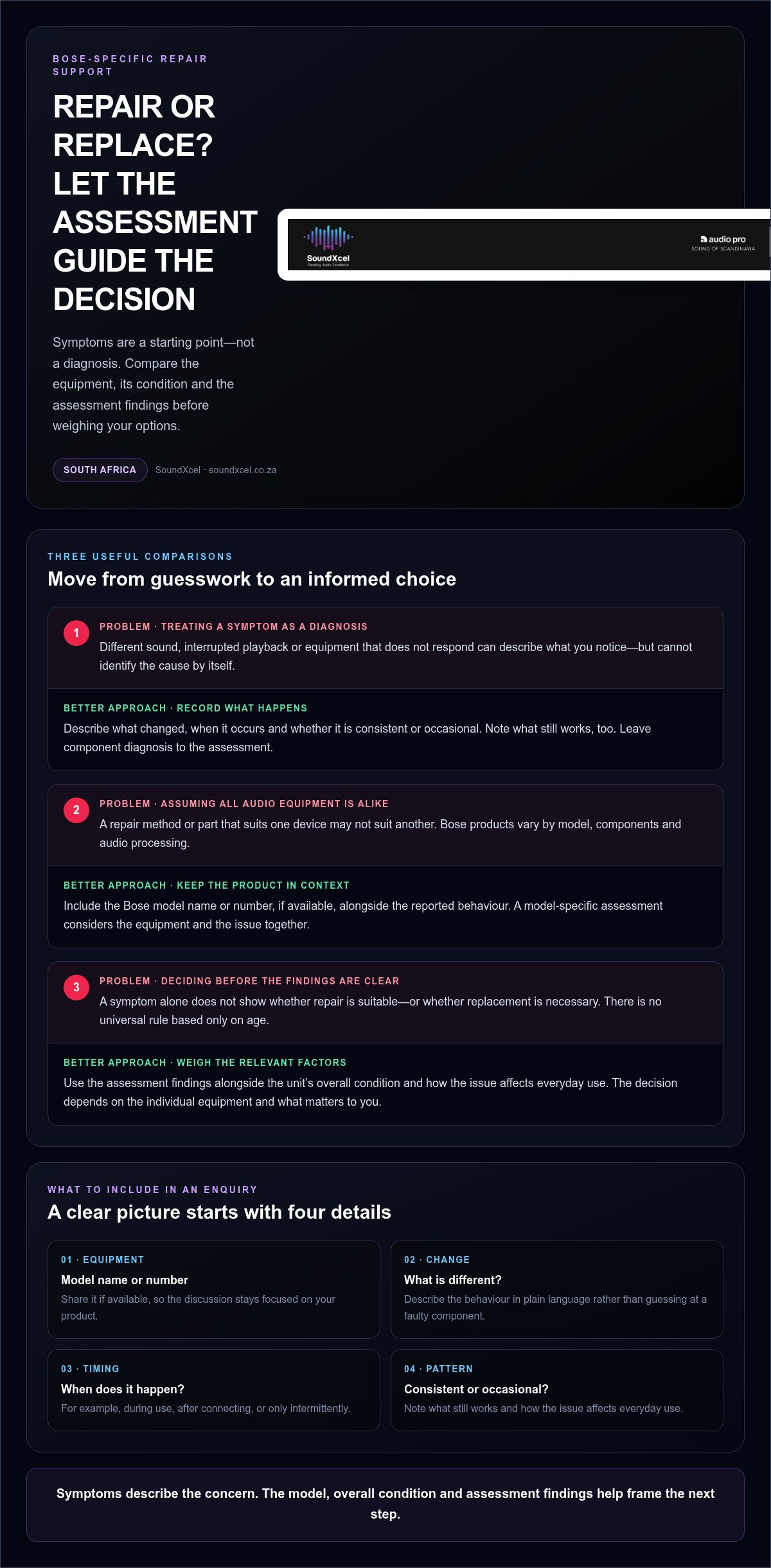
Once an assessment has clarified what the equipment is doing, weigh the findings against how you use it. There’s no universal rule that an older product should be replaced or that every fault is worth repairing. The decision depends on the condition of the individual unit, the assessment and what matters to you.
Use these factors to organise the comparison:
- Symptoms: Note how the issue affects everyday use and whether it is occasional or persistent. A symptom helps describe the problem, but doesn’t determine the solution by itself.
- Equipment condition: Consider the unit as a whole, including whether it remains useful to you apart from the reported issue.
- Assessment findings: Use the findings to understand the repair options for that equipment. Avoid deciding based on a guess about the cause or outcome.
- Your needs: Think about how well the current system suits your listening habits and whether your requirements have changed.
This framework helps keep repair and replacement in proportion. It gives you a clear basis for discussing options with a Bose repair specialist, without treating a particular symptom, model or age as an automatic answer.
When might repair be worth exploring?
Repair may be worth discussing if you still value the equipment and it suits the way you listen. An assessment can clarify its condition and inform whether repair is a suitable option. It isn’t possible to assume in advance that a unit is repairable or that repair will be the right choice for every owner. Let the findings guide the discussion, then weigh them against the role the equipment plays in your home or daily routine.
When should owners consider other options?
Other options may make sense if the assessment findings, the equipment’s overall condition or your current listening needs point away from repair. That doesn’t mean replacement is always the better answer. If you’re exploring an upgrade, consider what you want from a system before choosing one. SoundXcel’s Bose sound system selection guide can help you think through that choice.
If you’re considering pre-loved equipment as an alternative, compare it with your needs and the assessment findings rather than treating it as an automatic substitute. SoundXcel’s pre-loved Bose speakers buyer’s reference offers a starting point for exploring that route.
Keep the sequence simple: understand the symptoms, consider the assessment, then decide what best fits your needs. The assessment can clarify the direction for your equipment, while a change in listening requirements may make an alternative more relevant. Choose based on the specific unit and your priorities, not a blanket rule about repair or replacement.
How to prepare for a Bose repair assessment in South Africa
A little preparation makes it easier to explain the issue and understand what happens next. You don’t need to diagnose the fault or take the equipment apart. Gather the details you already know and share them with SoundXcel when you make an enquiry.
What information helps describe the problem?
Keep the description straightforward. Note the model name or number if you can identify it, what the equipment is doing, and what has changed from its usual behaviour. Mention when you first noticed the issue and whether it happens every time or only in certain circumstances. These observations help frame the enquiry; you don’t need to run technical tests or suggest a cause.
Use this short sequence to get ready:
- Identify the model. Record the product name or model number shown on the equipment or its documentation, if available. If you’re unsure, describe the product type and share the information you can find.
- Note the symptoms. Describe the change in sound or operation in everyday language. For example, say that playback is interrupted or that the equipment no longer behaves as expected. Avoid guessing which part may be responsible.
- Describe when it happens. Note when you first noticed the problem and whether it is constant, occasional or linked to a particular situation. A simple account is more useful than an uncertain technical explanation.
- Make an enquiry. Share the model details and symptom description with SoundXcel so the repair discussion can start with the relevant information.
How can you prepare equipment for assessment?
Don’t pack or hand over equipment until you have the information needed for the repair process. Include accessories only when they are requested. Otherwise, keep them safely aside along with other items that aren’t needed for the assessment. Keeping the equipment and accessories separate also makes it easier to describe what you’re submitting.
For an enquiry with an authorised Bose repair agent, clear product details and an accurate fault description are useful starting points. Prepare these notes in advance, even if the issue occurs intermittently. If the equipment’s behaviour changes before you make contact, update your description so it reflects what you’re observing.
Keep the process calm and practical. Don’t open the equipment or attempt a repair to prepare it. Simply record what you’ve noticed and follow the information SoundXcel provides about the assessment. This keeps the focus on the original issue and avoids adding uncertainty before the equipment is reviewed.
Ready to describe the issue and share your model details? Make a Bose repair enquiry with SoundXcel.
Arrange Bose repair support with SoundXcel
A Bose fault doesn’t have to leave you guessing about what to do next. SoundXcel provides Bose-specific repair support to customers across South Africa. Start with a clear description of the issue and share the model details you have. That gives the repair discussion a useful foundation.
When searching for an authorised Bose repair agent, what you need in practice is support that understands the Bose product you own. SoundXcel provides specialist Bose repairs. The right recommendation depends on the equipment and the findings of its assessment.
What happens after you make an enquiry?
Begin by sharing the equipment model, if known, and a straightforward account of what has changed. Describe when the issue occurs and whether it is consistent or intermittent. These details give the enquiry a useful starting point without requiring you to diagnose the cause.
After the enquiry, the equipment can be considered in light of its condition and the reported issue. The assessment findings inform the next recommendation. Avoid assuming a particular repair outcome before the equipment has been assessed.
Choose a clear next step for your Bose equipment
Before getting in touch, gather the product details and notes about its behaviour. If you don’t know the exact model, share what you can identify rather than delaying the enquiry. Keep the description factual: explain what you’ve noticed, when it happens, and whether anything has changed since the problem began. You don’t need to suggest a technical cause.
Follow the information SoundXcel provides about preparing the equipment. Include accessories only if requested, and don’t open the unit or attempt a repair yourself. This keeps your next step focused on describing the issue and having the equipment considered through Bose-specific repair support.
SoundXcel’s specialist Bose repair service offers South African owners a clear starting point for discussing equipment concerns. Share the model details and symptoms you’ve observed, then use the assessment findings to understand what follows. Those findings, rather than a blanket rule, should inform the decision about the equipment.
Ready to discuss your Bose equipment? Contact SoundXcel about Bose repairs.
Take the next step with confidence
A repair enquiry doesn’t need a perfect technical explanation. Start with what you know and let a clear description of the equipment’s behaviour open the conversation. If you’re searching for an authorised Bose repair agent, look for Bose-specific repair support and provide details about your particular product. A considered assessment is the practical basis for deciding what to do next, without assuming the result in advance.
Give yourself space to make the decision that fits your equipment and how you use it. Share the relevant details, follow the assessment process and consider the recommendation once the findings are clear. There’s no need to settle on repair or replacement before the equipment has been considered.
SoundXcel provides Bose-specific repair support for owners across South Africa. Take the first step by sharing the product details you have and describing what you’ve noticed. Contact SoundXcel about Bose repair support to discuss your equipment.
Frequently Asked Questions
What makes an authorised Bose repair agent different from a general repair service?
The phrase “authorised Bose repair agent” is often used by people looking for repair support specific to Bose equipment. The practical distinction is whether the repair service works with Bose products and considers the model and reported issue. SoundXcel provides Bose-specific repair services, rather than general electronics repair.
Can Bose headphones, speakers, and Lifestyle systems all be assessed for repair?
SoundXcel provides repair support for Bose equipment, including headphones and Lifestyle systems. The specific model matters, so include its name or number when enquiring. For example, identify whether the issue concerns a pair of headphones or part of a home audio set-up, and describe what has changed. This gives the enquiry a clear starting point and keeps attention on the equipment in question.
How do I describe a fault when enquiring about Bose repairs?
Describe what you notice rather than trying to name the cause. For instance, explain that sound cuts out during playback or that the system stops responding after it has been switched on. Include when you first noticed the behaviour and whether it happens every time. If the issue comes and goes, say so. A plain-language account is useful even if you don’t know technical terms.
What should I do before sending Bose equipment for assessment?
Follow the information SoundXcel provides before packing or handing over your equipment. Keep accessories separate unless they’re requested, and don’t open the unit or attempt an internal repair. If you have purchase or model documentation, keep it accessible in case it helps identify the equipment. Use the guidance provided for your enquiry to prepare the equipment.
How do I decide whether to repair or replace Bose equipment?
Use the assessment findings alongside your own needs to compare the options. Consider whether the equipment still suits how you listen, what condition it’s in, and what the assessment indicates. A recurring fault doesn’t automatically mean replacement is best, just as a repair enquiry doesn’t mean repair is always appropriate. If your listening needs have changed, that may also influence whether an alternative makes more sense.
Does Bose repair support serve customers across South Africa?
Yes. SoundXcel serves Bose repair customers nationally across South Africa. Start by sharing the product details and a clear description of the issue. This gives customers across the country a way to begin an enquiry without assuming a particular handover arrangement.
Can a Bose repair agent guarantee that my equipment will be restored?
A repair outcome should not be assumed before the equipment has been assessed. The suitable next step depends on the particular product, its condition and the assessment findings. A repair specialist can consider the reported issue and explain the direction indicated by the assessment, but that isn’t a promise of restoration. Share accurate details and wait for the findings before deciding whether repair or another option is right for you.
