

Certified Pre-Owned Bose Speakers: A South African Buyer’s Guide
October 4, 2026
Best All-Day Earbuds 2026: The Ultimate Comfort Guide
October 6, 2026
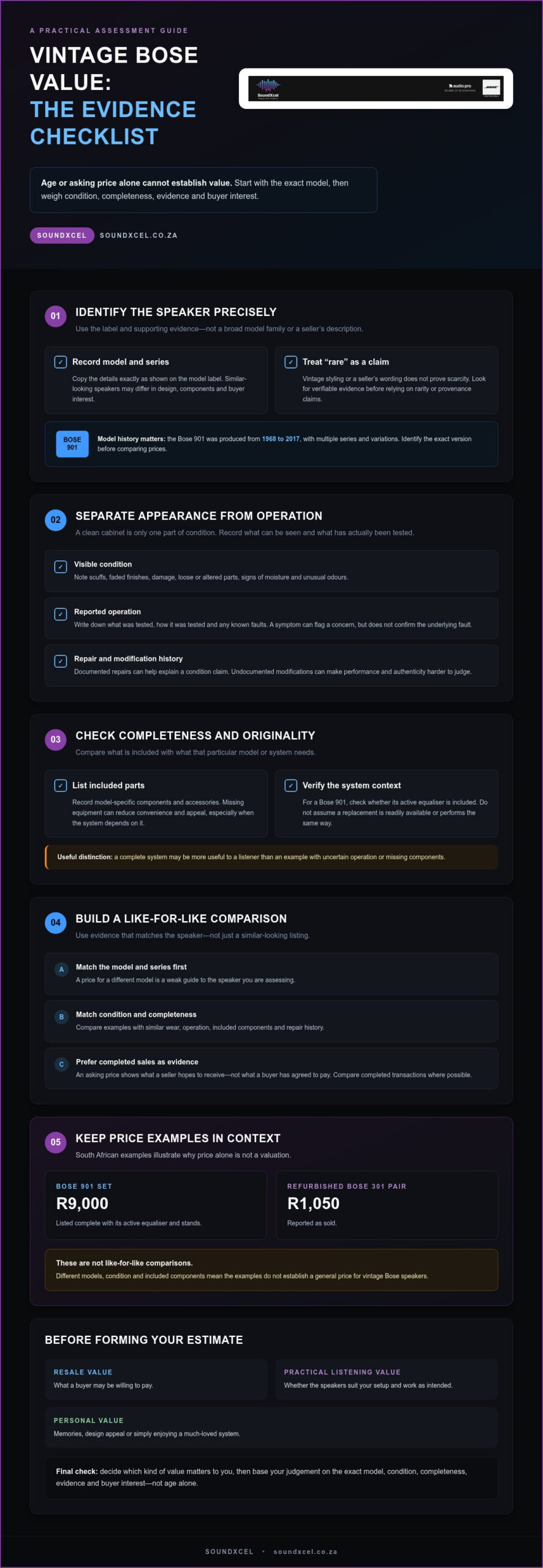
What if age tells you almost nothing about what a pair of vintage Bose speakers is worth? In South Africa, a Bose 901 set listed complete with its active equaliser and stands was priced at R9,000, while a refurbished Bose 301 pair sold for R1,050. Those examples aren’t like-for-like comparisons, but they show why the value of vintage Bose speakers can’t be judged by age or an asking price alone.
It’s understandable to want a quick guide when listings vary and photographs can’t show whether drivers, surrounds or essential components work properly. A rare model may attract interest, but condition, completeness, originality and buyer demand all affect its real-world appeal.
This guide explains what influences value, how to assess a speaker’s condition and authenticity, and what evidence to look for before buying or selling. You’ll also learn how model-specific components, such as the Bose 901’s active equaliser, affect a system’s usefulness and appeal. Whether you’re weighing a purchase, considering a repair or deciding what to do with speakers you already own, you’ll have a clearer basis for your next step.
Key Takeaways
- Judge the value of vintage Bose speakers by the exact model, condition, completeness and buyer interest, not age alone.
- Use the model label to compare like-for-like examples, and weigh asking prices against condition and included components.
- Inspect visible wear and test operation where possible. Record issues and seller evidence without assuming a symptom confirms a specific fault.
- Decide whether to keep, buy or sell based on your intended use and how much uncertainty you’re comfortable with.
- If a condition issue affects usability, Bose-specific repairs may be a practical next step. SoundXcel’s pre-loved Bose marketplace is another way to explore second-hand equipment.
What determines the value of vintage Bose speakers?
The value of vintage Bose speakers is an estimate shaped by the exact model, its condition, how complete the system is and how much interest buyers have in it. There’s no single figure that applies to every pair. Start by identifying the speaker, then compare it with similar examples and consider what a particular buyer needs.
Keep three kinds of value separate. Resale value reflects what a buyer may be willing to pay. Practical listening value depends on whether the speakers suit your setup and work as intended. Personal value comes from memories, design appeal or simply enjoying a much-loved system. These can differ considerably.
For context on the brand’s development and notable models, read this Bose Corporation history. To hear discussion of one distinctive vintage system, watch this video:
What does ‘value’ mean when assessing a vintage Bose speaker?
Value is a reasoned estimate of what a specific speaker or system may be worth to a particular buyer, based on its identity, condition, completeness and current demand. An asking price tells you what a seller hopes to receive, not what a buyer has agreed to pay. Completed sales offer stronger evidence, but compare examples with similar models, condition and included components before drawing conclusions.
Buyers also have different priorities. A collector may care about originality and model-specific accessories. An everyday listener may prioritise reliable performance. Someone seeking parts may be interested in a unit with limited use as a complete speaker. The same item can therefore appeal differently to each person.
Does an older Bose speaker automatically have greater value?
No. Age can add historical interest, but it doesn’t establish rarity, sound quality or demand. The Bose 901, for example, was produced from 1968 to 2017, with multiple series and variations. That long production history makes exact identification important. Vintage styling or a seller’s claim that a speaker is rare doesn’t prove scarcity.
Function matters, too. A working, complete system may be more useful to a listener than an older-looking example with uncertain operation or missing components. Start with the model and supporting evidence, not the age or headline price.
Which factors can raise or reduce a vintage Bose speaker’s value?
Start with the model label, not the seller’s headline description. Record the model and series exactly as shown, then compare it with examples of the same version. Similar-looking speakers can differ in design, components and buyer interest, so a price for another model is a weak guide to the value of vintage Bose speakers.
Condition involves more than a clean cabinet. Separate cosmetic wear, such as scuffs or faded finishes, from issues that could affect operation or intended use. Look for damage, loose or altered parts, signs of moisture and unusual odours. If the speakers have been tested, note what was tested and what the seller reports. A symptom can flag a concern, but it doesn’t identify the underlying fault by itself.
How do model, condition and completeness affect value?
Build a like-for-like comparison. Match the model and series first, then record condition, included components and any repair history. Missing model-specific equipment or accessories can reduce convenience and appeal, particularly if the system depends on them. Don’t assume replacements are readily available or that a substitute will perform the same way.
Originality and repair work also need context. A documented repair may reassure a buyer if it addresses a known issue, while undocumented modifications can make performance and authenticity harder to judge. Treat the seller’s description as a starting point and look for evidence to support it.
What evidence should support a vintage speaker’s value?
Review clear photographs of the model labels, both speakers, visible wear and relevant components. Check that the images show the actual item being offered. For condition claims, useful evidence may include a clear account of how the speakers were tested, known faults and available repair records.
Compare completed transactions where possible, not just current listings. An unsold asking price shows what a seller hopes to receive; it doesn’t establish what buyers have paid. Keep comparisons tight: match model, completeness and condition before using another example to inform your estimate. Claims of rarity, provenance or restoration need supporting records or other verifiable evidence.
- Model: label details and series.
- Condition: cosmetic wear, damage and reported operation.
- Completeness: included components and accessories.
- Evidence: photographs, test details and repair history.
If an operating issue affects usability, SoundXcel’s specialist Bose-specific repairs may be a practical next step before you decide what the speakers are worth to you.
How can you compare vintage Bose speakers before buying or selling?
A structured comparison helps you judge listings using consistent evidence rather than polished descriptions or a compelling asking price. First match the exact model and series. Then compare examples with similar condition and completeness. A different model, or a pair with missing components, may not provide a fair benchmark for the speaker you’re considering.
Which details belong in a vintage Bose speaker comparison?
Use the same fields for each example. A simple comparison sheet keeps unknowns visible instead of turning them into assumptions:
Model
Exact label details and series, or “unclear” if they can’t be read.
Condition
Visible wear or damage, reported operation and any stated issues.
Completeness
Components and accessories shown or specifically listed; note anything missing.
Documentation
Available manuals, receipts or repair records. Record “not provided” rather than guessing.
Seller evidence
Label and condition photographs, test details and the basis for restoration or history claims.
Avoid unsupported numeric scores. A short note such as “one speaker untested” is more useful than a rating that hides uncertainty. This framework can clarify relative strengths and concerns, but it can’t guarantee a particular resale outcome.
How should buyers interpret marketplace listings?
Compare the description with what the photographs show. Check that model labels, visible condition and included components are consistent across the listing. If a key detail is absent, record it as unknown. Don’t treat an attractive presentation as proof that the speakers work or suit your listening setup.
In South Africa, listings on platforms such as Bob Shop, Junk Mail Marketplace and Facebook Marketplace can help you see what sellers are asking. Keep asking prices separate from completed transactions: a live listing shows a seller’s expectation, not a confirmed sale. One listing is only one example, not a measure of the wider market.
For a potential purchase, weigh the evidence against your intended use. A complete, working set may suit everyday listening, while a cosmetically impressive pair with unclear operation may involve more uncertainty. SoundXcel’s certified pre-loved Bose marketplace is another place to browse second-hand equipment. Assess each item using its own details.
How should you assess, test and maintain a vintage Bose speaker?
Follow a consistent sequence: identify the model, inspect its condition, test operation where practical, then document what you found. This creates a clearer record for a buying or selling decision and helps separate observable facts from guesses. A short listening test can reveal an issue, but it isn’t a full technical assessment or a reliable way to diagnose its cause.
What should you check before judging a speaker’s condition?
Start with the label and note the model details. Inspect each speaker carefully without opening the cabinet or forcing controls. Look for damage, loose connections, worn areas and signs of previous repairs or modification. Check visible controls and components for obvious wear or damage, and note anything you can’t inspect clearly.
If you have an appropriate setup and can test the speakers safely, record exactly what you tried. For example, note whether both speakers produced sound, whether the sound seemed uneven or whether you heard crackling. Include the connected equipment and any unusual behaviour. Don’t turn an observation into a diagnosis: uneven sound could have more than one cause.
- Identify: Record the model and any visible identifying details.
- Inspect: Note cabinet condition, connections and visible wear or damage.
- Test: Describe the setup and what you observed, or state that the speakers weren’t tested.
- Document: Keep clear notes and photographs of the condition and any reported repair history.
Be precise. “Crackling heard during playback” is more useful than “damaged speaker” unless a fault has been professionally identified. A brief test also can’t establish how the speakers will perform in every listening setup.
When might repair make more sense than replacement?
Consider your intended use, the speaker’s overall condition and what remains uncertain. A pair that otherwise suits your needs may warrant a professional assessment if an operating issue affects listening. If the condition or missing components make the system unsuitable for your plans, weigh that uncertainty against the practical appeal of another option. Don’t assume a repair will be possible or that it will produce a particular result.
Documenting symptoms gives a Bose specialist useful context, but an assessment is needed to identify a fault. SoundXcel offers Bose-specific repairs for condition issues that affect usability. Explore Bose repair options as a practical step before deciding whether to keep, buy or sell. Clear condition records make your judgement of the value of vintage Bose speakers more grounded, although they can’t guarantee a resale price.
What should you do next with a vintage Bose speaker?
Choose your next step by weighing the speaker’s condition and completeness against how you want to use it. A fully working set that suits your listening space may be worth keeping, even if resale isn’t your priority. If faults affect everyday use, a repair assessment can help you understand the issue before deciding. Selling may suit you better if the speakers no longer meet your needs, while buying pre-loved offers another route to Bose ownership.
Should you keep, sell or repair a vintage Bose speaker?
Before deciding, write down the model, included components, visible condition and anything you observed during testing. If you enjoy the speakers and they work for your setup, practical and personal value may outweigh resale prospects. If a fault limits their use, consider a professional assessment alongside your plans for the system. Age or sentimental attachment can matter to you, but neither guarantees a particular financial return.
For a sale, clear records help you describe the item accurately and set realistic expectations. For a repair decision, focus on whether resolving the known issue could make the speakers useful for your intended listening, without assuming a particular repair outcome.
How can pre-loved Bose equipment support a considered decision?
A curated pre-loved marketplace gives you another way to explore Bose equipment when comparing options. SoundXcel offers certified pre-loved Bose equipment. Review each item’s details and match them to your needs. For further buying guidance, see Investing in Pre-Loved Bose Speakers: The Complete South African Buyer’s Reference.
Keep the decision practical: choose repair when a condition issue affects a speaker you want to use, keep it if it still suits your listening and personal preferences, or sell when it no longer has a place in your setup. The value of vintage Bose speakers depends on the specific item and buyer, so use evidence to guide your choice rather than expecting a guaranteed resale result.
Explore SoundXcel’s Bose audio solutions for Bose-specific repairs and pre-loved equipment as you consider your next step.
Make your next Bose decision with confidence
The value of vintage Bose speakers depends on the exact model, condition, completeness and buyer interest, not age alone. Compare like-for-like examples and treat asking prices as seller expectations rather than proof of a completed sale. Before buying or selling, document the model, included components and operating issues so your decision rests on clear evidence.
Then choose the path that suits your needs. Keep a speaker that still brings value to your listening, consider a repair assessment if a fault affects its use, or explore pre-loved equipment if you’re looking for another option. SoundXcel offers Bose-specific repairs and a marketplace for certified pre-loved Bose equipment.
Ready to explore a practical next step? Explore SoundXcel’s Bose audio solutions for repair support or pre-loved Bose equipment. With a careful assessment and a clear sense of what matters to you, you can move forward with confidence.
Frequently Asked Questions
How much are vintage Bose speakers worth?
The value of vintage Bose speakers varies by model, condition, completeness and buyer interest. Junk Mail Marketplace listings for Bose speakers have ranged from R1,500 to R9,500, but these are asking prices, not confirmed sale values, and may cover different models and conditions. Treat the range as a starting point only. For a useful comparison, match the exact model and series, then look for similar examples and completed sales.
Does age make a Bose speaker more valuable?
No. Age alone doesn’t establish rarity, condition or demand. A speaker may be decades old yet common, incomplete or in need of attention. Identify the model and series, then consider its working condition and whether buyers are seeking that particular version. Collectors may value originality, while everyday listeners may care more about reliable performance and suitability for their audio setup.
How can I identify a vintage Bose speaker model?
Look for the identification label on the speaker cabinet and record the model name and series exactly as printed. Photograph the label if it’s hard to read, and note identifying details on matching components or accessories. Compare that information with reliable model references and listings showing the same version. Don’t rely on cabinet styling or a seller’s description alone, as similar-looking models may differ.
What condition checks matter when buying vintage Bose speakers?
Inspect both cabinets, connections and visible components for wear or damage. If practical, test the pair using an appropriate audio setup and note what you hear, but don’t treat a brief test as a full technical assessment. For Bose 901 speakers, check whether the required matching active equaliser is included. On older models, inspect foam surrounds for deterioration. Record reported faults and repair history separately from what you can verify.
Should I repair or replace a vintage Bose speaker?
Consider repair if the speaker suits your needs and a fault is limiting its use. Document the symptoms, model and included components, then seek a Bose-specific repair assessment before deciding. A reported symptom doesn’t confirm its cause, and an assessment can help clarify the issue without guaranteeing a particular repair outcome. If the system is incomplete or doesn’t fit your plans, compare it with other suitable options before committing.
Are asking prices a reliable guide to the value of vintage Bose speakers?
Asking prices show what sellers hope to receive, not what buyers have agreed to pay. Use them to see how sellers position comparable models, but look for completed transactions to understand what has actually sold. Compare like-for-like examples, including condition and included components. A single listing can’t represent the wider South African market, and a high price or rarity claim isn’t proof of value without supporting evidence.
Where can I find pre-loved Bose equipment in South Africa?
You can explore second-hand Bose equipment through online marketplaces and SoundXcel’s marketplace for certified pre-loved Bose equipment. Review each listing’s model, condition, completeness and evidence of operation. Certification applies to equipment identified as certified, not automatically to every vintage Bose speaker. SoundXcel also offers Bose-specific repairs, which may be relevant if a condition issue affects a speaker you’re considering keeping or buying.
