

Bose Headphone Repair South Africa: How to Get Your Headphones Assessed
September 26, 2026
Headphones for Focus and Concentration: How to Choose the Right Pair
September 28, 2026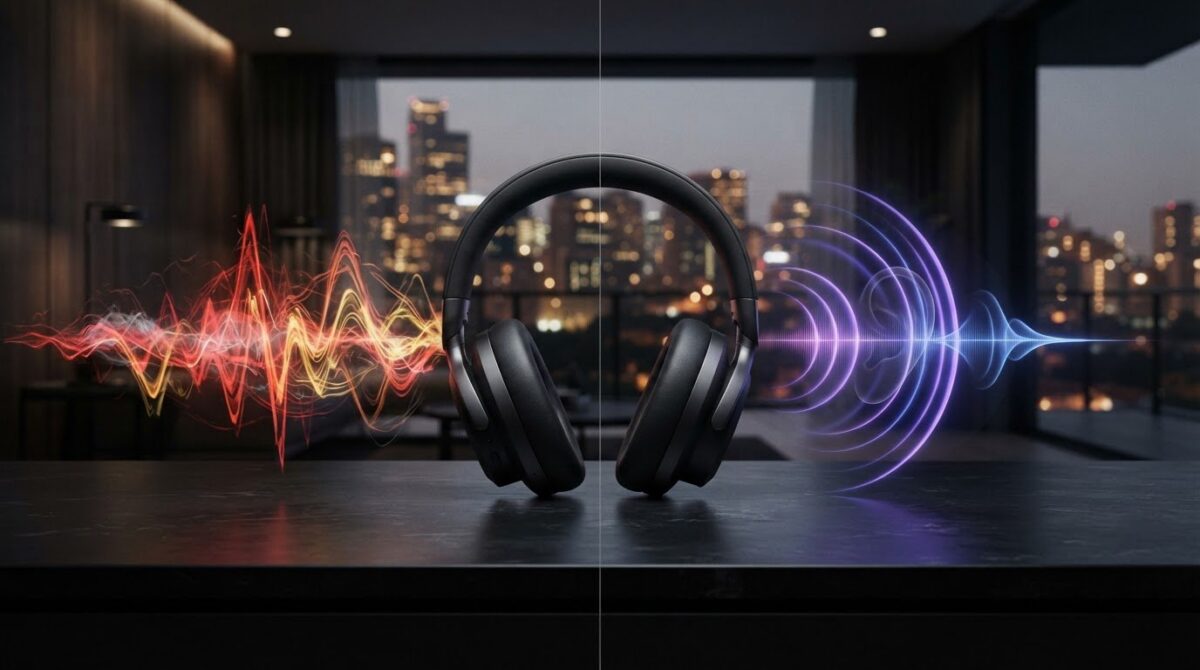
What if noise-cancelling headphones aren’t the main threat to your hearing? If you’ve wondered, “are noise cancelling headphones bad for your ears?”, a pressure-like sensation or the quiet created by ANC can make the answer feel unclear. The technology itself isn’t known to harm hearing; listening volume and exposure time matter more.
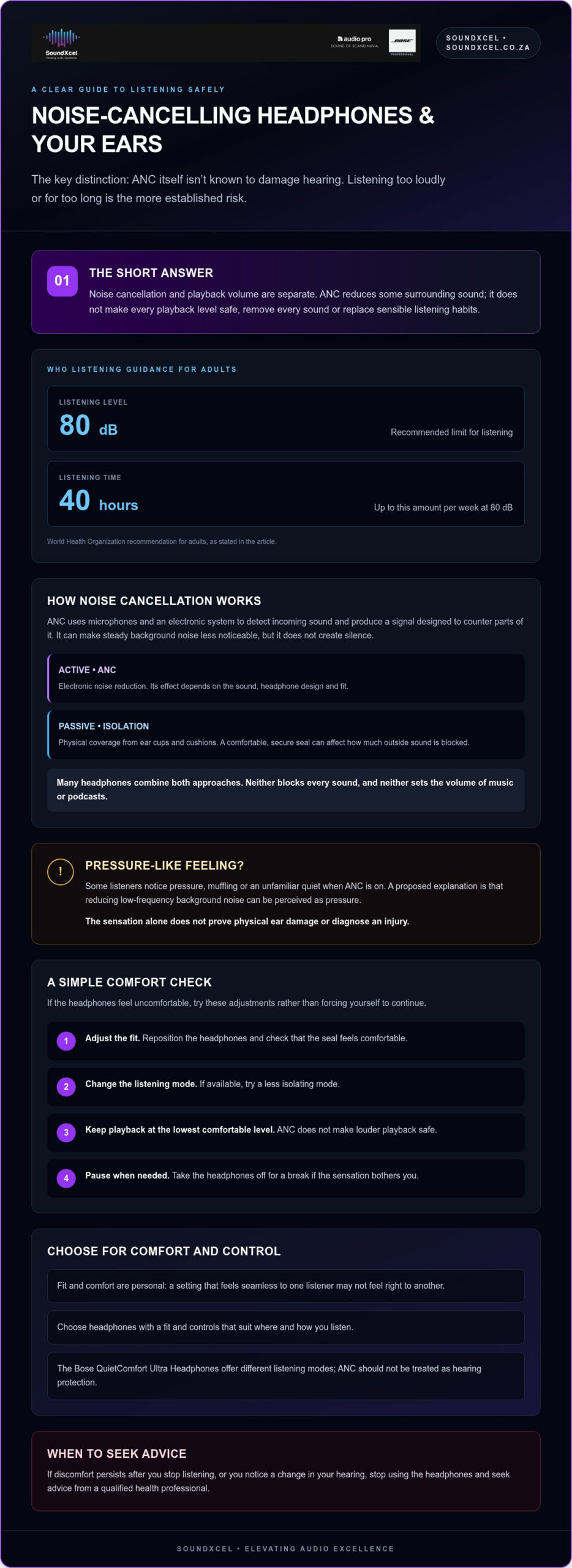
It’s understandable to be cautious. ANC reduces background noise, while audio played too loudly for too long can put your hearing at risk. The World Health Organization recommends adults limit listening to 80 decibels for up to 40 hours a week. A feeling of pressure doesn’t, on its own, mean your ears have been physically damaged.
This guide explains how ANC works, what can affect your hearing and how to listen more comfortably. You’ll find practical ways to manage volume and listening time, plus signs that it may be sensible to seek professional advice. Use these points to decide whether noise-cancelling headphones suit your listening habits.
Key Takeaways
- Wondering “are noise cancelling headphones bad for your ears”? Learn how ANC differs from the sound exposure that can put hearing at risk.
- Understand why a quieter background can change how your surroundings feel, and why noise cancellation doesn’t make every playback level safe.
- Use a simple comfort check: adjust the fit and listening mode, keep playback at the lowest comfortable level, and pause when needed.
- Choose headphones with a fit and controls that suit where and how you listen. Comfort is personal.
- See how the Bose QuietComfort Ultra Headphones offer different listening modes, without treating ANC as hearing protection.
Are noise-cancelling headphones bad for your ears? The short answer
For most listeners, ANC itself isn’t known to damage hearing. The more established risk is listening to audio too loudly or for too long. If you’re asking “are noise cancelling headphones bad for your ears?”, distinguish sound exposure from sensations such as pressure, discomfort or an unfamiliar sense of quiet. Those feelings may be unpleasant, but they don’t prove that your ears have been injured.
Noise cancellation and playback volume are separate things to consider. ANC reduces some surrounding sound; it doesn’t make every volume level safe, remove every sound or replace sensible listening habits. The Hearing Centre Singapore, an audiology provider, reports no scientific evidence that ANC technology itself harms hearing. That’s a measured answer, not a guarantee that every headphone or listening experience will suit every person.
This video discusses claims about noise-cancelling headphones. Treat its title as a prompt to assess the evidence, rather than as a medical conclusion.
What does noise cancellation do?
Active noise cancellation uses a headphone system to reduce some incoming ambient sound. Passive isolation works differently: it comes from the physical fit of the headphones and how well the ear cups seal around your ears. Many designs combine both approaches, but neither blocks every sound. For a broader technical overview, see How noise-cancelling headphones work.
Does ANC damage hearing by itself?
The key distinction is between the ANC function and the audio you choose to play. Hearing risk is associated with sound that is too loud for too long, so consider playback volume and listening duration regardless of your noise-cancellation setting. A pressure-like or unusual sensation can be a reason to adjust the fit, change the mode or take a break. By itself, it isn’t evidence of physical ear damage.
If discomfort persists or you notice a change in your hearing, stop using the headphones and seek advice from a qualified health professional. Comfort is individual, and a setting that feels seamless to one listener may not feel right to another.
How ANC works, and why headphones can feel unusual
Active noise cancellation (ANC) reduces some surrounding sound using microphones and an electronic system. The headphones detect incoming sound and produce a signal designed to counter parts of it. This can make steady background noise less noticeable, but it doesn’t create silence or remove every sound. The result depends on the sound, the headphone design and how well the headphones fit.
Active cancellation and passive isolation are different
ANC is electronic. Passive isolation comes from physical coverage: ear cups and cushions create a barrier that reduces some sound from reaching your ears. A secure, comfortable fit can affect how much outside noise is blocked, while a poor seal may let more sound through. The two approaches can work together, but neither guarantees that every environment will sound the same. For a wider overview of the technology, see How noise-cancelling headphones work.
Reducing background noise can also change how you perceive your surroundings. A fan, engine or air conditioner may fade into the background, making other sounds seem more noticeable by contrast. ANC changes the sound environment; it doesn’t set the volume of music or podcasts. As The Hearing Centre Singapore explains, the ANC function is distinct from playback level, which still needs to be considered separately.
Why might noise-cancelling headphones feel pressurising?
Some listeners describe a pressure-like, muffled or simply unfamiliar feeling when ANC is on. One proposed explanation is that the sudden reduction in low-frequency background noise can be perceived as a pressure sensation. The Hearing Centre Singapore discusses this as a perceptual experience, not proof that physical pressure inside the ear has changed. A sensation alone can’t diagnose injury.
Comfort varies. If the feeling bothers you, switch to a less isolating mode if available, reposition the headphones or take them off for a break. Don’t force yourself to continue using a setting that feels uncomfortable. If discomfort persists after you stop listening, or you notice a change in your hearing, seek advice from a qualified health professional.
So, are noise cancelling headphones bad for your ears simply because they use ANC? The available evidence doesn’t establish ANC itself as a cause of hearing damage. A quieter backdrop may make listening more comfortable, but it doesn’t make loud playback harmless. The Bose QuietComfort Ultra Headphones, for example, offer Quiet Mode, Aware Mode and Immersion Mode, giving listeners options for how much ambient sound they hear. Explore ANC headphone options with fit and listening comfort in mind.
ANC headphones, hearing risk, and common misconceptions
ANC, playback volume, listening time and physical fit are separate factors. Noise cancellation may make background sound less noticeable, but it doesn’t control how loud your music is or how long you listen. A snug fit can affect comfort and passive isolation, but it isn’t a measure of hearing safety.
This distinction matters if you’re still asking, “are noise cancelling headphones bad for your ears?” The concern isn’t simply whether ANC is switched on. Consider the sound reaching your ears, how long you’re exposed to it and whether the headphones feel comfortable.
| Factor | What it affects | Practical takeaway |
|---|---|---|
| ANC | Reduces some surrounding sound; it doesn’t set playback volume. | Don’t treat noise cancellation as a safety limit. |
| Playback volume | The loudness of the audio you hear. | Choose a comfortable, restrained level. |
| Listening duration | How long your ears are exposed to sound. | Take breaks and consider your total listening time. |
| Physical fit | Comfort and how much sound the ear cups physically block. | Adjust or remove headphones if the fit feels uncomfortable. |
Does noise cancellation protect hearing in loud places?
ANC can reduce perceived background noise, but that isn’t the same as certified hearing protection. Don’t rely on consumer ANC headphones as protective equipment around hazardous noise, including in a workplace or near loud machinery. Follow the relevant safety guidance for that environment and use suitable protective equipment where required. A quieter listening experience doesn’t prove that the sound level is safe.
Is listening quietly still a concern over time?
Sound level and exposure duration both matter. The World Health Organization’s safe-listening standard for personal audio devices recommends that adults limit exposure to 80 dB for up to 40 hours a week. This is a population-level guideline, not a guarantee that a particular volume or listening pattern is safe for every person.
A device’s volume slider alone can’t establish the sound level reaching your ears. Actual exposure may vary with the device, headphones, audio and fit. Use the WHO guidance as a reference, not as permission to listen at the stated level continuously. ANC may help make a noisy setting feel quieter, but it doesn’t make loud playback safe or replace breaks and sensible volume choices.
How to use noise-cancelling headphones more comfortably
A comfortable setup should feel easy from the start. If you’re wondering “are noise cancelling headphones bad for your ears?”, focus on how they fit, how loud you listen and how your ears feel during and after use. Make small adjustments rather than pushing through discomfort.
A practical listening and comfort checklist
- Start at a low, comfortable volume. Choose the lowest level at which you can clearly hear your audio. Don’t turn it up simply because you’re in a noisy place.
- Check the fit. Position the ear cups evenly and make sure the headband feels secure without pressing uncomfortably. If the headphones pinch or cause soreness, reposition them or take them off.
- Choose a suitable listening mode. Use a setting that feels comfortable for your surroundings, rather than relying on louder playback to overcome background noise. The Bose QuietComfort Ultra Headphones offer Quiet Mode, Aware Mode and Immersion Mode as listening options, not as hearing protection.
- Pause regularly. Remove the headphones between listening sessions, especially if your ears feel tired, warm or uncomfortable. Stop listening if discomfort develops, and don’t resume until it has settled.
Comfort is individual. A fit or ANC setting that feels natural to one person may feel intrusive to another. If you’re trying headphones in person, wear them long enough to assess the fit and controls, but stop if you feel pain or discomfort. At home, make one adjustment at a time so you can tell whether the fit, mode or playback level is contributing to the sensation.
When should you ask a professional?
Take persistent symptoms seriously. Stop using the headphones and seek advice from a qualified health professional or audiologist if you have ongoing ear pain, ringing, dizziness or a change in hearing. A sudden or significant hearing change needs prompt medical assessment. Don’t try to diagnose the cause from symptoms alone; similar sensations can have different explanations, and an assessment can help determine what is happening.
For everyday listening, keep the volume comfortable, adjust the fit and mode to suit you, and take breaks when needed. If you’re comparing ANC options, explore ANC headphones with comfort and listening controls in mind.
Choosing ANC headphones with comfort and control in mind
Choose headphones for the way you’ll actually use them. Consider how the fit feels, whether the controls are straightforward, and whether you can adjust how much outside sound you hear. Comfort is personal, so try a suitable fit where possible. Product features can make listening easier to customise, but they don’t replace sensible volume choices or hearing advice.
Which headphone features may help you personalise listening?
The Bose QuietComfort Ultra Headphones offer Quiet Mode, Aware Mode and Immersion Mode, providing options for different listening preferences and environments. CustomTune technology analyses ear shape and adapts sound performance. These are personalisation features, not hearing-protection or medical features. If possible, check that the headphones feel comfortable and that you can change modes without interrupting your listening routine.
Before choosing, ask yourself:
- Does the fit feel secure without pinching or causing pressure?
- Can you adjust listening modes and controls easily?
- Will you mainly listen at home, during travel or in shared spaces?
- Can you keep playback comfortable without turning it up to overcome background noise?
A mode that suits a quiet room may not feel right in a busier setting. Look for flexibility, then choose the option that feels comfortable for the moment. No ANC setting makes high-volume listening safe, and a product’s features can’t determine your personal sound exposure.
Are open-ear headphones a safer alternative?
Open-ear designs differ in how they sit and how much they leave the ear uncovered. Some listeners may prefer that fit or find it easier to hear surrounding sounds, but open-ear listening isn’t a guaranteed hearing-safety solution. Playback volume and listening duration still matter, and hearing more of the environment doesn’t make headphones suitable protective equipment in hazardous noise.
The Bose Ultra Open Earbuds are an open-ear option to consider if you prefer a different wearing style. Compare the design with your usual listening settings and comfort preferences, rather than choosing it on the assumption that it prevents hearing damage. For more detail, read the Bose Ultra Open Earbuds guide and the Bose Ultra Open Earbuds review.
If you’re comparing options, explore the Bose QuietComfort Ultra Headphones and consider how their modes, fit and controls align with your listening habits.
Choose a listening experience that feels right
If you’re asking “are noise cancelling headphones bad for your ears?”, the key distinction is between ANC and sound exposure. ANC itself isn’t the same as harmful volume. Listening level and duration deserve attention, while pressure or discomfort is a cue to adjust the fit, change modes or take a break, not a diagnosis of ear damage.
Choose headphones that feel comfortable and offer controls suited to your listening habits. The Bose QuietComfort Ultra Headphones include Quiet Mode, Aware Mode and Immersion Mode, plus CustomTune technology, which analyses ear shape and adapts sound performance. These features personalise the listening experience; they aren’t hearing protection.
Keep volume comfortable, take breaks and seek qualified advice if hearing symptoms persist. To explore an ANC option with adjustable listening modes, view the Bose QuietComfort Ultra Headphones.
Frequently Asked Questions
Are noise-cancelling headphones bad for your ears?
Generally, ANC itself isn’t known to damage hearing. The Hearing Centre Singapore reports no scientific evidence that active noise cancellation itself harms ears or hearing. The more established concern is audio played too loudly for too long, regardless of ANC. A pressure-like or unfamiliar sensation can be uncomfortable, but doesn’t by itself show that your ears are injured. Adjust the fit or mode, lower playback, or take a break if needed.
Can noise-cancelling headphones cause tinnitus?
There’s no established evidence that ANC alone causes tinnitus. Ringing or buzzing can have different causes, and loud sound exposure is a recognised hearing-health concern. The World Health Organization’s safe-listening guidance considers both sound level and listening time. If ringing starts or persists, stop listening and seek advice from a qualified health professional or audiologist. Don’t assume the cause from the symptom alone.
Can you wear noise-cancelling headphones all day?
There isn’t one all-day duration that’s suitable for everyone. Comfort, fit, playback level and total sound exposure all matter. Take regular breaks, keep audio at the lowest comfortable level, and remove the headphones if your ears feel sore, tired or uncomfortable. The World Health Organization provides listening guidance based on both sound level and time, but it isn’t a guarantee of safety for every person or situation.
Why do noise-cancelling headphones make my ears feel blocked?
Some listeners describe a blocked, muffled or pressure-like feeling with ANC. One proposed explanation is that reducing low-frequency background noise can feel unfamiliar or be perceived as pressure. That sensation alone doesn’t prove that physical pressure inside the ear has changed or that damage has occurred. Try another listening mode, check the fit or take the headphones off. If the feeling persists, seek professional advice.
Do noise-cancelling headphones protect your hearing?
No, consumer ANC headphones shouldn’t be treated as hearing protection. They reduce some surrounding sounds, but that isn’t the same as certified protection for hazardous noise. Don’t rely on them at work or near loud machinery instead of appropriate protective equipment. Follow the relevant safety guidance for your environment. ANC also doesn’t make loud music safe, so keep playback at a comfortable level and consider how long you listen.
Is it safe to listen to music with noise cancellation on?
For most listeners, using ANC while playing music is not inherently unsafe; playback level and listening duration still matter. Noise cancellation doesn’t set a safe volume or prevent overexposure. The World Health Organization recommends adults limit listening to 80 dB for up to 40 hours a week. This is guidance, not a personal guarantee, and a device’s volume setting alone may not tell you the sound level reaching your ears.
Should I stop using headphones if my ears hurt?
Yes. Take the headphones off if your ears hurt, and don’t push through discomfort. Check whether the fit or listening mode feels uncomfortable, but stop using them if pain continues. Seek advice from a qualified health professional or audiologist for persistent pain, ringing, dizziness or hearing changes. A sudden or significant change in hearing warrants prompt medical assessment. Symptoms alone can’t identify the cause, so avoid self-diagnosing.
