


The Ultimate Guide to Whole Home Audio Systems in South Africa (2026)
July 22, 2026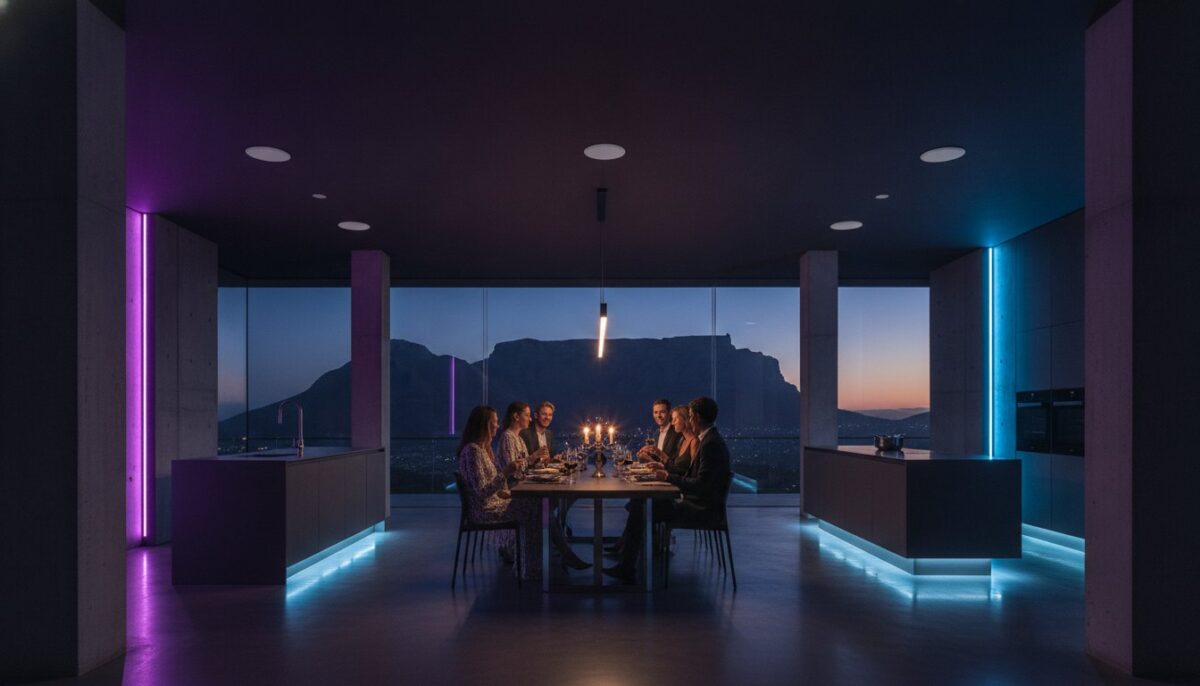
Imagine hosting a dinner party where the music follows your guests perfectly from the open-plan kitchen to the patio, yet not a single wire or bulky box is in sight. Choosing the right in-ceiling speakers South Africa has to offer can be daunting when you’re trying to avoid cluttered floor space or inconsistent sound that drops off at the room’s centre. You want a system that complements your architecture rather than competing with it.
This guide shows you exactly how to select, position, and install a professional audio system to transform your space into a premium soundscape. We’ll explore expert placement strategies, local hardware availability like the Bose DesignMax series, and essential technical requirements. From ensuring SANS 10142-1 compliance to integrating your system with backup power for load shedding resilience, we provide the expert roadmap you need for a seamless, high-performance audio experience.
Key Takeaways
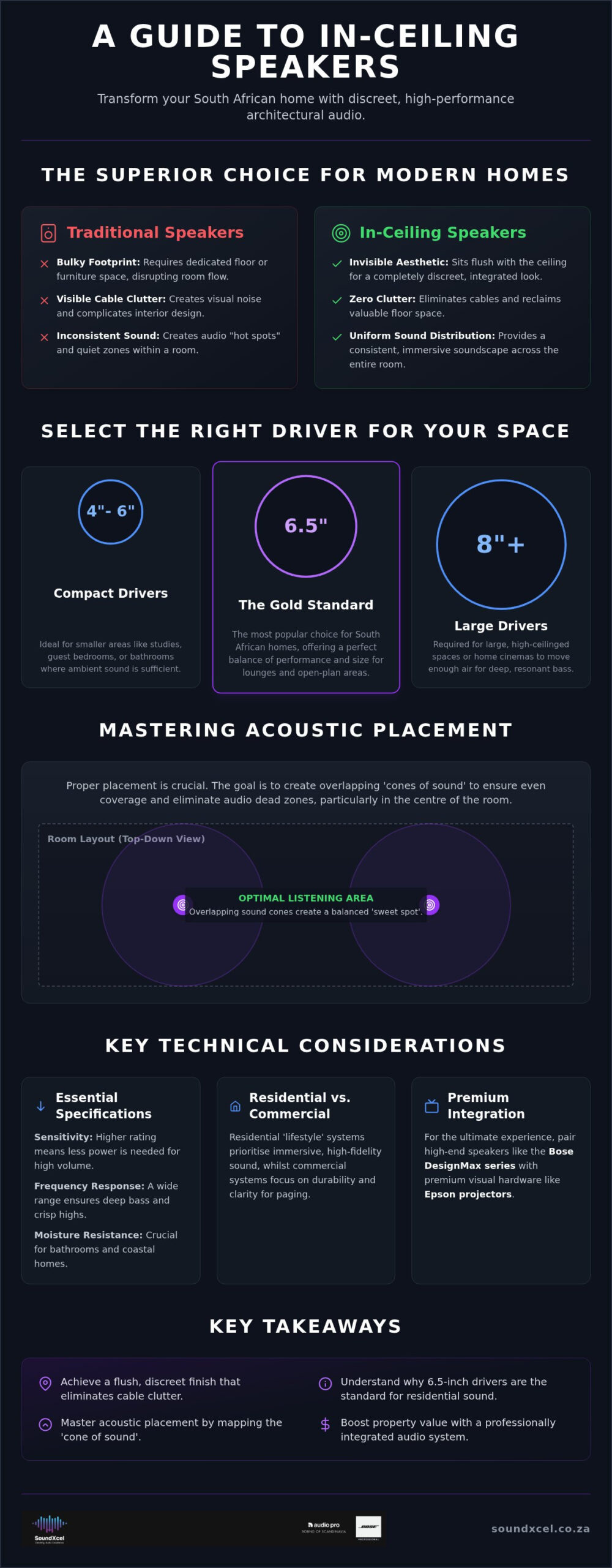
- Learn how to achieve a flush, discreet finish that eliminates cable clutter and preserves your interior design.
- Discover why 6.5-inch drivers are the standard for in-ceiling speakers South Africa homeowners choose for optimal residential sound.
- Master acoustic placement by mapping your room and calculating the ‘cone of sound’ to eliminate audio dead zones.
- Distinguish between immersive residential ‘lifestyle’ audio and the high-durability requirements of commercial paging systems.
- Explore the value of pairing Bose DesignMax hardware with Epson projectors for a fully integrated premium soundscape.
Why In-Ceiling Speakers are the Superior Choice for South African Homes
In-ceiling speakers are architectural audio solutions engineered to sit within your ceiling cavity, providing a flush, discreet appearance. Modern South African homes often feature sleek lines and expansive open-plan living. These systems offer a cleaner alternative to traditional setups. By choosing in-ceiling speakers South Africa residents can eliminate the visual noise of speaker cables and bulky floor units. This shift improves aesthetics and changes how sound behaves in your room. Traditional speakers often create “hot spots” where the volume is too loud near the unit and too quiet elsewhere. Architectural speakers provide uniform sound distribution. They create a consistent “sweet spot” across the entire living area, ensuring every guest enjoys the same audio quality regardless of where they stand.
A professionally installed, integrated audio system significantly boosts property value. Potential buyers in the premium South African market view high-end audio as a permanent fixture, similar to custom cabinetry or advanced climate control. It suggests a home that is technologically advanced and move-in ready. This investment pays dividends by making your residence stand out in a competitive real estate market. It transforms a standard house into a sophisticated, modern estate.
The ‘Invisible’ Audio Trend in Modern Architecture
South African residential design increasingly leans toward minimalism. Architects and interior designers prioritise integrated technology that serves a purpose without dominating the room’s visual identity. Most premium units, such as those in the Bose DesignMax series, feature magnetic, paintable grilles. These allow you to match the speaker cover to your ceiling’s exact colour. This makes the hardware virtually disappear into the background. It’s a sophisticated way to enjoy high-quality audio whilst maintaining the curated, uncluttered look of your home. Professionals prefer these solutions because they don’t interfere with lighting layouts or structural beams.
Performance Without the Footprint
Space is a luxury, even in large residences. Traditional bookshelf speakers require dedicated furniture or floor space, often interrupting the flow of a room. In-ceiling units reclaim this space by utilising the ceiling cavity itself. This cavity often acts as a natural acoustic enclosure, enhancing bass response and resonance when properly installed. For those interested in understanding loudspeaker technology, the mounting environment is just as critical as the driver itself. Architectural audio is the intersection of high-fidelity sound and structural integration. Investing in premium in-ceiling speakers South Africa ensures your home remains at the forefront of modern lifestyle trends. This approach delivers powerful performance without sacrificing a single square metre of your floor plan.
Selecting the Right Specifications for Your Ceiling Audio System
Choosing the best in-ceiling speakers South Africa has to offer requires looking beyond the brand name. You’re selecting a technical component that must interact with your home’s architecture. The 6.5-inch driver is the industry’s golden standard for a reason. It provides a balanced surface area that delivers punchy mid-range and respectable bass whilst fitting into standard ceiling joist spacings. If you go smaller, you might lose the warmth of the music. If you go larger, the physical footprint can become overbearing in smaller rooms. Performance also relies on sensitivity and power handling. High-sensitivity speakers require less amplifier power to reach high volumes, making them ideal for large, high-ceilinged South African lounges.
Frequency response is equally vital. A wide range ensures your system handles both deep bass lines and crisp, clear highs without distortion. For spaces like bathrooms or covered patios, prioritise moisture resistance. Look for “splash-proof” models designed to withstand the humidity of a coastal home or the steam of a master en-suite. These units feature treated cones and stainless steel grilles to prevent corrosion over time. When planning your layout, consider expert tips for creating musical spaces to ensure your hardware matches your lifestyle goals. You can browse our Bose DesignMax Series to find models that meet these exact technical requirements.
Woofer Size vs. Room Volume
Room size dictates your hardware choice. For smaller areas like studies or guest bedrooms, 4-inch to 6-inch drivers provide ample coverage without overwhelming the space. Large, open-plan living areas often require 8-inch drivers or even dedicated in-ceiling subwoofers to move enough air for deep, resonant sound. Always look for models with wide-dispersion tweeters. These components ensure that sound spreads evenly across the floor, maintaining audio clarity whilst you move between the kitchen and the dining area.
100V Line vs. Low Impedance Systems
System architecture depends on your environment. Residential setups typically use Low Impedance (8 Ohm) systems. These are designed for high-fidelity music and short cable runs within a single home. Commercial environments, such as retail stores or offices, benefit from 100V line systems. These allow for dozens of speakers to be connected over long distances without significant signal loss. Impedance is the measure of electrical resistance in a speaker circuit. Selecting the right system type ensures your amplifier operates efficiently and your speakers remain protected from electrical strain.
Residential Lounges vs Commercial Spaces: Finding the Right Balance
Audio requirements change significantly depending on the environment. In a home, you’re usually seeking an emotional connection to music or a cinematic film experience. In a business, you’re managing atmosphere, customer behaviour, and essential communication. High-quality in-ceiling speakers South Africa businesses choose must handle constant daily use whilst delivering clear paging for staff and guests. Conversely, homeowners prioritise the “Lifestyle” experience. They want sound that fills a room without cluttering the floor. The Bose DesignMax series bridges this gap perfectly. It offers the refined acoustics required for a luxury living room and the rugged reliability needed for a high-traffic boutique retail centre.
Pairing these audio solutions with Epson home cinema projectors creates a complete sensory environment. It’s about more than just sound; it’s about creating a unified entertainment hub. This combination works exceptionally well in South African homes where large windows and bright natural light can sometimes make traditional televisions less effective. A high-lumen Epson projector provides the visual scale, whilst the architectural audio provides the necessary depth. This integrated approach ensures your technology serves your lifestyle without dominating the room’s physical space.
The Bose Lifestyle Collection for Home Immersion
Bose Lifestyle systems integrate seamlessly with architectural speakers to create a full surround sound experience. This setup is ideal for movies, sports, and gaming, providing a 360-degree soundscape that feels completely natural. If you’re looking for a sustainable entry point into high-end audio, consider our certified Pre-Loved Bose Equipment. These units offer the same premium performance and sophisticated engineering at a different price point. SoundXcel also operates a dedicated Bose repair centre, providing specialised support for legacy hardware nationally. This ensures your investment remains protected and continues to perform at its peak for years to come.
Bose DesignMax for South African Businesses
Restaurants, boardrooms, and retail stores require consistent, intelligible audio. DesignMax is the preferred choice for these professional settings because it maintains brand consistency through uniform sound quality. The QuickHold mounting mechanism simplifies the installation process significantly. It reduces the time technicians spend on ladders, which is a practical benefit for busy retail stores or active construction sites. Using in-ceiling speakers South Africa professionals trust ensures your business sounds as good as it looks. This hardware allows you to create multiple audio zones, giving you the flexibility to play high-energy music in a reception area whilst maintaining a quiet, professional atmosphere in the boardroom.
Professional Installation and Acoustic Placement Strategies
Planning the layout for in-ceiling speakers South Africa requires a methodical approach. Start by mapping your room to identify primary listening positions. Note any acoustic obstacles like large windows, air conditioning vents, or structural beams. Your goal is to create a “cone of sound” where the audio coverage from each unit overlaps slightly. This ensures you don’t encounter dead zones whilst walking through the space. If the speakers are too far apart, the audio will feel disjointed. If they are too close, you risk creating overwhelming hotspots that ruin the ambient experience.
Acoustic isolation is a common oversight in South African multi-storey homes. Always select back boxes for your installation. These enclosures prevent sound from leaking into the rooms directly above, which is essential for maintaining privacy. They also serve a technical purpose by providing a controlled air volume behind the driver, which significantly improves bass response. Wiring also demands attention. Ensure you use the correct gauge of high-quality copper cable. For distances over 15 metres, 14-gauge wire is preferable to maintain signal integrity and prevent power loss between your amplifier and the ceiling.
Stereo vs. Mono Placement
Small areas like hallways or guest toilets often don’t have the width for a traditional stereo pair. In these spaces, use single-stereo speakers. These units feature two tweeters in one chassis to deliver both left and right channels from a single point. For lounges or dining rooms, stick to traditional pairs. Space them evenly from the centre of the room to create a wide, immersive soundstage. This balanced placement respects the architectural symmetry of your home whilst providing the high-fidelity performance you expect from a premium system.
The Importance of Professional Support
Attempting a DIY installation often leads to unforeseen complications. Cutting into a structural joist or miscalculating the load-bearing capacity of your ceiling can cause expensive damage. Professional installers understand how to navigate these structural risks whilst ensuring your system is future-proofed for smart home integration. Our team provides the expert guidance needed to execute a flawless setup. You can contact SoundXcel for professional installation advice to ensure your project meets national safety standards and acoustic benchmarks. We maintain a national network of experts ready to help you plan and execute your audio vision.
Elevating Your Audio with SoundXcel’s Premium Solutions
SoundXcel serves as your national partner for premium audio-visual technology. We specialise in authorised Bose and Epson hardware, ensuring your home or business benefits from world-class engineering. Choosing the right in-ceiling speakers South Africa offers is only the first step. Long-term satisfaction depends on genuine support and expert integration. We provide a curated selection of both new and pre-loved equipment. This allows you to access high-performance audio regardless of your project’s scale. By pairing architectural audio with 4K Epson home cinema projectors, we create immersive environments that rival any professional cinema.
Our dedicated Bose repair centre adds unique value to your investment. Unlike general retailers, we understand the intricate components of your hardware. This facility allows us to maintain and restore systems to their original factory standards. We focus on the intersection of luxury and functionality, ensuring your technology enhances your daily experience without complication. Selecting the best in-ceiling speakers South Africa provides requires a partner who understands the local market and the technical nuances of premium sound.
Authorised Bose Expertise in South Africa
Purchasing from an authorised dealer provides essential peace of mind. You gain access to local warranties and genuine parts that third-party retailers can’t offer. Our team provides specialised support for the Bose DesignMax and Lifestyle ranges. This technical expertise ensures your system is configured for peak performance from day one. We believe that premium sound must be matched by professional reliability. This commitment defines our approach to every project we undertake, from private residences to boutique commercial spaces.
A National Legacy of Sound
We serve customers across South Africa with expert AV advice tailored to local architectural styles. Our commitment extends beyond the initial sale. We help you breathe new life into older Bose systems through professional repairs, extending the longevity of your investment. This sustainable approach helps you maintain a high-quality soundscape for years. Whether you’re installing a new system or maintaining a legacy setup, our national network is ready to assist. Explore the Bose DesignMax range at SoundXcel to begin your audio transformation today.
Transform Your Environment with Architectural Sound
Achieving the perfect audio balance requires more than just high-end hardware; it demands a strategic approach to placement and integration. You’ve seen how selecting the correct driver size and understanding room acoustics can eliminate dead zones whilst preserving your home’s aesthetic. Whether you’re designing a private cinema with the Bose Lifestyle Collection or equipping a boutique store, the focus remains on delivering uniform, high-fidelity sound that respects your architecture. Investing in premium in-ceiling speakers South Africa homeowners and businesses prefer ensures your system adds lasting value to your property.
SoundXcel stands as your authorised Bose and Epson specialist, offering the technical guidance required for a flawless installation. We specialise in the DesignMax and Lifestyle ranges, providing both new and certified pre-loved options to suit your specific project. Our national professional repair centre ensures that your equipment remains in peak condition, protecting your investment long after the initial setup. Upgrade your audio experience with SoundXcel’s Bose Collection and enjoy the clarity of a professionally curated soundscape. Your journey toward a seamless, invisible audio solution starts with expert advice and reliable local support.
Frequently Asked Questions
How many in-ceiling speakers do I need for a standard-sized room?
Most standard rooms between 15 and 25 square metres require a pair of speakers for balanced stereo sound. Placing two units ensures even coverage without creating volume hotspots. For larger South African lounges or open-plan kitchens, you might need four speakers spaced roughly 2.5 metres apart. This configuration maintains a consistent “sweet spot” across the entire floor area whilst providing a rich, immersive atmosphere.
Can I use in-ceiling speakers for a 5.1 home cinema system?
You can certainly use architectural speakers for a 5.1 home cinema setup. They are particularly effective as rear surround or height channels in modern Dolby Atmos configurations. Whilst they offer a sleek, invisible look, ensure you pair them with a dedicated centre channel and a floor-standing subwoofer for the best cinematic results. This combination provides the directional clarity needed for dialogue and the deep bass required for action sequences.
Do in-ceiling speakers require a special type of amplifier?
Most in-ceiling speakers South Africa residents install use standard low-impedance amplifiers or AV receivers. You don’t need a “special” amp, but you must match the power output to the speakers’ wattage and impedance ratings. If you’re building a multi-room system, consider a dedicated multi-zone amplifier. This allows you to control the volume and music source independently in different areas of your home through a single interface.
What is a ‘back box’ and is it necessary for my installation?
A back box is a protective enclosure that sits behind the speaker inside the ceiling cavity. It’s essential for sound isolation, preventing audio from leaking into the rooms directly above. These boxes also improve the speaker’s bass response by providing a controlled acoustic environment for the driver. In many South African installations, they are also a critical fire-safety requirement for protecting the electrical components within the ceiling structure.
Are in-ceiling speakers waterproof for use in bathrooms or patios?
Standard in-ceiling models are often moisture-resistant, but they aren’t fully waterproof. For bathrooms, steam rooms, or covered patios, you must select “marine-grade” or IP-rated speakers designed for high-humidity areas. These units feature treated cones and stainless steel grilles to prevent corrosion from humidity and salt air. Always check the manufacturer’s specifications to ensure the hardware can handle the specific moisture levels of your intended environment.
Can I install in-ceiling speakers myself or should I hire a professional?
Professional installation is the safest choice to ensure your system meets SANS 10142-1 electrical standards. Hiring an expert prevents accidental damage to structural ceiling joists and ensures optimal acoustic placement based on your room’s unique layout. A professional installer also handles the complexities of cable management and amplifier calibration. This guarantees your in-ceiling speakers South Africa investment delivers the premium performance and reliability you expect without technical setbacks.
How do I connect my in-ceiling speakers to my existing smart home system?
Connecting to a smart home system usually requires a Wi-Fi-enabled amplifier or a streaming bridge. You connect the speaker wires to the smart amp, which then joins your home network via Wi-Fi or Ethernet. This setup allows you to control your audio through mobile apps, voice assistants, or integrated home automation platforms. It’s an efficient way to manage multi-room audio whilst keeping the physical hardware completely hidden from view.
What is the difference between a 2-way and a 3-way in-ceiling speaker?
The primary difference lies in how the speaker handles different sound frequencies. A 2-way speaker uses a woofer for bass and a tweeter for high frequencies. A 3-way speaker adds a dedicated mid-range driver, which provides greater detail and clarity in vocals and instruments. Whilst 2-way models are excellent for background music, 3-way units are the preferred choice for high-fidelity listening and premium home theatre environments where audio precision is paramount.
