


Bose Ultra Open Earbuds Review South Africa: The Best Earbuds for All-Day Wear in 2026
September 6, 2026
Home Theatre vs Soundbar: Choosing Your Ultimate Audio Experience in 2026
September 8, 2026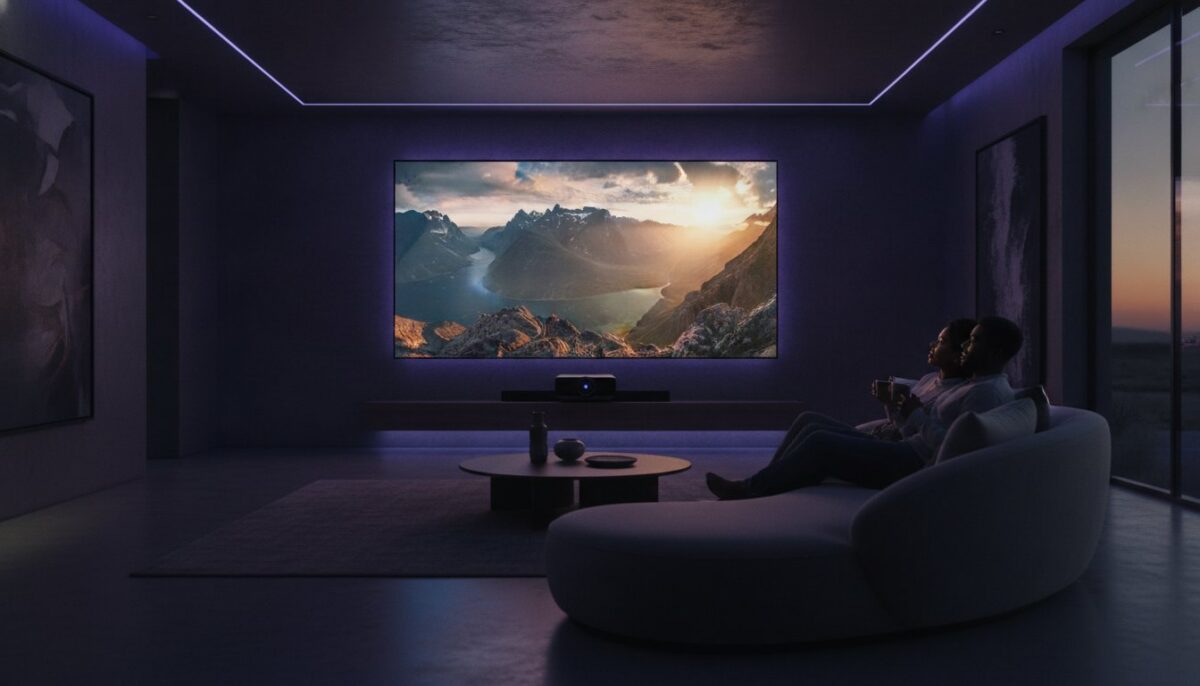
What if your lounge could outperform a commercial cinema without a single cable running across the ceiling? You likely crave the impact of a 120-inch display, yet the logistics of mounting a massive, fragile glass panel or wiring a traditional projector feel overwhelming. It is a valid concern; standard televisions are restricted by their physical frame, while older projection systems often require total darkness to look their best.
You don’t need to settle for a cramped view or tinny audio. This guide demonstrates how a high-performance laser tv system integrates Epson visual precision with Bose immersive sound architecture. We will examine the latest ultra-short-throw technology for 2026, the role of specialised screens in bright rooms, and how to curate a professional-grade cinema directly on your media console. Learn how to transform your daily viewing into an aspirational lifestyle experience that prioritises both quality and simplicity.
Key Takeaways
- Understand how a laser tv replaces traditional screens by combining ultra-short-throw technology with specialised ambient light rejecting screens for 4K clarity.
- Discover the longevity of Epson’s laser light source, which provides up to 20,000 hours of performance without the maintenance required by traditional bulbs.
- Learn how to pair massive 120-inch visuals with the Bose Smart Ultra Soundbar to ensure your audio matches the scale of your cinema.
- Identify the best model for your environment, contrasting the high-brightness Epson LS800 with the versatile LS650 for smaller rooms.
- Prepare your space for a seamless installation by focusing on wall flatness and optimal power point placement for a clutter-free finish.
What is a Laser TV and How Does it Work?
A laser tv system represents a fundamental shift in how we define a “television” for the modern home. Unlike a standard display, it consists of two distinct parts: a specialised ultra-short-throw projector and a fixed-frame, ambient light rejecting screen. While people often ask, “What is a Laser TV?“, it’s best understood as an all-in-one entertainment hub. It differs from a standard laser projector because it’s built to function exactly like a traditional TV, featuring integrated smart platforms, high-fidelity audio, and rapid start-up times.
The distinction between a laser tv and a traditional projector is vital for the average consumer. While a projector is often a standalone component meant for a dedicated dark room, this system is a curated solution designed to thrive in your brightly lit living area. It combines the immense brightness of a laser light source with a screen that actively fights glare, ensuring the picture remains crisp even with the curtains open.
The Ultra Short Throw (UST) Advantage
Traditional projectors often demand complex ceiling mounts and long cable runs that clutter your space. Ultra-short-throw (UST) technology solves this by using a sophisticated lens system to cast a massive image from just centimetres away. You can place the chassis directly on your existing media console, exactly where a standard LED panel would sit. This compact setup fits perfectly on standard South African media furniture, eliminating the need for invasive renovations or visible wiring.
UST technology is the bridge between traditional projection and standard flat-panels. Because the light travels such a short distance, the image remains incredibly bright and sharp. You won’t have to worry about shadows when someone walks in front of the screen, which is a common frustration with long-throw setups. It provides the scale of a commercial cinema with the convenience of a lounge-friendly device.
Reflected vs. Direct Light: A Healthier Viewing Experience
Watching a traditional LED or OLED screen involves looking directly into a high-intensity light source. This direct backlighting often leads to eye fatigue during extended viewing sessions or movie marathons. A laser tv operates differently by reflecting light off a screen before it reaches your eyes. This reflected light mimics how we see the natural world, resulting in a much softer and more comfortable visual experience.
Eye strain is significantly reduced because the system emits virtually zero blue light compared to high-brightness LCD panels. This makes it a superior choice for family rooms where children might spend hours watching cartoons or playing games. You get the benefit of a 120-inch image without the harsh glare associated with oversized glass panels, making it as gentle on the eyes as it is impressive to behold.
Technical Deep Dive: Why Laser Technology Wins in 2026
Modern laser engines have redefined home cinema by removing the maintenance hurdles of the past. Traditional projectors relied on high-pressure lamps with limited lifespans, often requiring replacement after just a few thousand hours. In contrast, the laser light source in a modern laser tv is rated for up to 20,000 hours of use. This longevity ensures decades of viewing without the cost or hassle of bulb changes. Understanding how Laser TVs differ from traditional TVs is essential for appreciating this leap in reliability. You also benefit from “Instant On/Off” functionality. This eliminates the frustrating warm-up and cool-down periods required by older technology, making it as responsive as a standard flat-panel.
High-lumen output is the secret to maintaining picture quality in bright environments. Epson models deliver enough brightness to cut through ambient light in open-plan South African homes. This ensures that sports and news remain visible during the day, provided you pair the unit with the correct screen. It’s a level of versatility that traditional lamps simply cannot match.
Epson 3LCD vs. DLP: The Battle for Colour Brightness
Epson utilises a proprietary 3-chip 3LCD architecture that sets it apart from single-chip DLP competitors. Many DLP systems use a spinning colour wheel. This can cause a distracting “rainbow effect” for sensitive viewers, where flashes of colour appear during fast-motion scenes. 3LCD technology eliminates this entirely by processing primary colours simultaneously. This results in equal White and Colour Brightness, a technical specification that is vital for vibrant images in bright living centres. While some brands boast high peak white brightness, their colour brightness often lags; Epson ensures every hue remains saturated and true to life.
Resolution and HDR: Bringing the Cinema Home
Achieving a cinematic feel on a 100-inch screen requires immense detail. 4K PRO-UHD resolution provides the necessary pixel density to keep images crisp even at massive scales. When combined with HDR10+ and HLG support, the system reveals hidden details in the darkest shadows whilst preserving the brilliance of highlights. 10-bit colour processing further enhances the experience, delivering over a billion colours for smooth gradients and realistic skin tones. This level of precision is why many enthusiasts explore professional AV integration when designing their bespoke home theatre. High-lumen output completes the package, maintaining picture quality during the day so you never have to compromise on your favourite content.
Choosing the Right Model: Epson EpiqVision Ultra Series
Selecting the perfect laser tv involves balancing light output with the physical layout of your lounge. The Epson EpiqVision Ultra series provides two distinct paths to a premium cinematic experience. Both models share a minimalist aesthetic that integrates into modern interiors without the bulk of a traditional display. They offer integrated Android TV, allowing you to stream your favourite series directly without extra hardware. While an in-depth laser TV review might focus on various international brands, Epson remains the preferred choice for those who value local reliability and authorised dealer support in South Africa.
Epson EpiqVision Ultra LS800: The Bright Room King
The LS800 is engineered for environments where light control isn’t always possible. It delivers 4,000 lumens of colour and white brightness, ensuring that the picture remains vibrant even during the day. Its ultra-short-throw ratio is particularly impressive; it can project a 100-inch image from just 9.8cm away from the wall. This makes it ideal for narrow rooms or shallow media consoles. Gamers will also appreciate the low input lag of 16.7ms, which provides a responsive experience that rivals high-end gaming monitors on a massive scale. It is the ultimate solution for those who refuse to compromise on size or clarity.
Epson EpiqVision Ultra LS650: Smart and Accessible
For those with more modest room configurations, the LS650 offers a refined balance of performance and size. It produces 3,600 lumens of brightness, which is more than sufficient for most living centres. The 4K PRO-UHD resolution ensures every detail is rendered with precision, creating a truly cinematic everyday screen. While it features high-quality built-in Yamaha sound as a baseline, its real potential is unlocked when you prepare for a Bose upgrade. The compact footprint allows it to sit comfortably on smaller furniture, making it a versatile and accessible entry point into the world of ultra-short-throw cinema.

The Audio Equation: Pairing Bose with Your Laser TV
A massive 120-inch image demands a soundstage of equal scale. Built-in speakers in a laser tv are often functional but rarely cinematic. They lack the depth and spatial precision required to match 4K PRO-UHD visuals. To truly bring the cinema home, you must consider the audio half of the AV equation. The Bose Smart Ultra Soundbar serves as the perfect companion, providing the power and clarity required for high-impact entertainment. For those seeking the ultimate in immersion, the Bose Lifestyle Collection creates a dedicated 5.1 or 7.1 environment that places you at the centre of the action.
Bose Smart Ultra Soundbar: AI-Powered Clarity
Dialogue often gets lost in complex soundtracks during intense action scenes. Bose addresses this with AI Dialogue Mode, which uses machine learning to ensure voices remain crisp even amidst explosions or swelling orchestral scores. This technology works in tandem with the Epson’s visual precision to keep you fully engaged in the narrative. The soundbar features two upward-firing dipole speakers. These bounce sound off your ceiling to create a Dolby Atmos overhead experience, making it feel as though rain is falling or aircraft are flying directly above you. Connecting the unit is simple; use an HDMI eARC cable to link the soundbar to your Epson projector for seamless, single-remote control.
Seamless Integration with Bose SimpleSync
Living in a shared home often means compromising on volume during late-night movie sessions. Bose SimpleSync technology allows you to pair Bose QuietComfort Ultra Earbuds or Bose QuietComfort Ultra Headphones directly with your soundbar. This creates a personal cinema experience without disturbing others in the house. You can maintain independent volume control, keeping the soundbar muted whilst your headphones deliver full-range audio. Because the QC Ultra range utilises Bluetooth 5.3, you benefit from rock-solid stability. This is essential for maintaining perfect lip-sync accuracy, ensuring the audio never lags behind the massive laser tv image.
To experience the synergy between Epson visuals and Bose audio, explore our curated home cinema bundles and find the perfect match for your lounge.
Implementation: Screens, Lighting, and Installation
A laser tv is more than a single device; it is a carefully balanced ecosystem. While the projector provides the visual engine, the environment and the surface it projects onto dictate the final quality. To achieve the 120-inch cinematic experience you expect in 2026, you must look beyond the hardware. Proper implementation ensures that Epson’s visual precision and Bose’s immersive audio perform exactly as intended in your specific living space.
The Role of the ALR Screen
An Ambient Light Rejecting (ALR) screen is non-negotiable for any ultra-short-throw setup. Unlike a standard white wall, which reflects light in all directions and washes out contrast, an ALR screen features a specialised lenticular surface. Microscopic “teeth” on the screen reflect the light from the projector below directly to your eyes whilst absorbing or redirecting light from ceiling fixtures and windows. This allows the image to remain vibrant even in high-brightness South African lounges. You can choose between a fixed-frame screen for a dedicated theatre look or a motorised rising screen that disappears into a console when not in use. Without this specialised surface, even a premium laser tv will struggle to deliver deep blacks and saturated colours during the day.
Professional Installation vs. DIY
Aligning an ultra-short-throw projector requires extreme precision. Because the unit sits so close to the wall, a deviation of just one millimetre at the lens can result in a significant misalignment at the top of the screen. Professional setup involves more than just placing the unit on a cabinet. It requires ensuring the mounting wall is perfectly flat; any slight bow in the plaster will cause “waves” in the image. Consider this checklist for room preparation before your equipment arrives:
- Wall Flatness: Verify that the mounting surface is level and free of structural curves or texture.
- Power Points: Recessed sockets behind the media console allow for a flush fit and a cleaner, clutter-free look.
- Cable Management: Plan to route HDMI eARC cables internally to maintain a “floating screen” aesthetic.
Professional calibration is the final step to unlocking the full potential of Epson’s laser engine. SoundXcel serves as the national expert for both supply and professional setup, ensuring your system is tuned to the unique acoustics and lighting of your room. Our national installation service guarantees that your investment performs at its peak, providing a seamless transition from a standard television to a high-performance home cinema.
Transform Your Lounge into a Premier Cinema
Embracing a laser tv system is about more than just increasing screen size; it is about curating a professional-grade entertainment hub that fits your lifestyle. You’ve seen how Epson’s 3LCD technology delivers vibrant 4K visuals for up to 20,000 hours, and how Bose audio ensures the soundstage matches that immense scale. By pairing an ultra-short-throw projector with a specialised ALR screen, you eliminate the compromises of traditional home theatres.
As an authorised Epson dealer and premium Bose repair centre, SoundXcel provides the expertise needed to integrate these sophisticated systems into your home. Our national delivery and installation services ensure that your setup is calibrated for peak performance from the moment it arrives. You don’t have to navigate technical hurdles alone when you have a dedicated guide to help you build your dream cinema.
View our range of Epson Home Cinema Projectors and Bose Audio Systems and start your journey toward an unparalleled viewing experience today.
Frequently Asked Questions
Can I use a Laser TV in a bright room with windows?
Yes, you can use a laser tv in bright environments if you select a high-brightness model and the correct screen. The Epson EpiqVision Ultra LS800 produces 4,000 lumens of colour and white brightness, which is specifically designed to overcome ambient light. Pairing this with an Ambient Light Rejecting (ALR) screen is essential; it ensures that sunlight doesn’t wash out the picture, maintaining deep blacks and vibrant colours throughout the day.
How long do Laser TV bulbs last compared to standard projectors?
Epson laser engines are rated for a lifespan of up to 20,000 hours, which significantly outperforms traditional projector lamps. Standard bulbs typically require replacement every 3,000 to 5,000 hours, leading to ongoing maintenance costs and downtime. With a laser system, you could watch four hours of content every single day for over thirteen years without ever needing to change a light source. This makes it a far more reliable long-term investment for your home.
Do I need a special screen for a Laser TV, or is a white wall okay?
You definitely need a specialised Ambient Light Rejecting (ALR) screen to achieve the best results. While a white wall might seem like a cost-effective shortcut, its flat surface reflects light in all directions, causing the image to look faded and grey in anything but total darkness. An ALR screen uses microscopic structures to focus the projector’s light towards your seating area whilst absorbing light from the ceiling and windows, preserving the 4K clarity.
What is the best audio system to pair with an Epson Laser TV?
The Bose Smart Ultra Soundbar is the premier choice for pairing with an Epson laser tv system. It provides the immersive Dolby Atmos soundstage required to match a 120-inch visual experience. For those seeking a full surround sound environment, the Bose Lifestyle Collection offers unrivalled depth. Using Bose SimpleSync technology, you can also pair Bose QuietComfort Ultra Headphones for private listening, ensuring your audio is as sophisticated as your display.
Can I play video games on a Laser TV without lag?
Modern units like the Epson LS800 are excellent for gaming due to their incredibly low input lag. With a response time of approximately 16.7ms, these systems handle fast-paced competitive games on the latest consoles without noticeable delay. You get the advantage of a massive 150-inch gaming display that remains responsive and smooth. This level of performance ensures that your gaming sessions are immersive and lag-free, even during high-intensity action sequences.
Is a Laser TV better than a 100-inch LED television?
A laser system offers several advantages over a 100-inch LED television, particularly regarding eye comfort and installation flexibility. Large glass panels are heavy, difficult to mount, and emit direct blue light that can cause eye strain. In contrast, laser systems use reflected light, which is much gentler on the eyes during long viewing sessions. They are also easier to transport and set up, providing a massive, high-performance display without the logistical nightmare of a fragile glass screen.
How far from the wall does a Laser TV need to be?
These systems are designed to sit just centimetres away from your wall or screen. For instance, the Epson LS800 can project a 100-inch image from a distance of only 9.8cm. This ultra-short-throw capability allows the unit to sit comfortably on a standard media console. You won’t need to mount anything on your ceiling or run long cables across the room, making it a sleek and unobtrusive addition to any modern South African lounge.
Does SoundXcel provide installation for Epson projectors in South Africa?
SoundXcel provides professional national installation and delivery for all Epson home cinema projectors across South Africa. Our team ensures that your system is perfectly aligned with your ALR screen and integrated with your Bose audio hardware for peak performance. We handle the technical complexities of calibration and cable management, giving you peace of mind that your premium investment is set up correctly. We also offer specialised Bose repairs to support your equipment long-term.
