

Bose Home Theatre Buying Guide: Choose Your Ideal System
October 12, 2026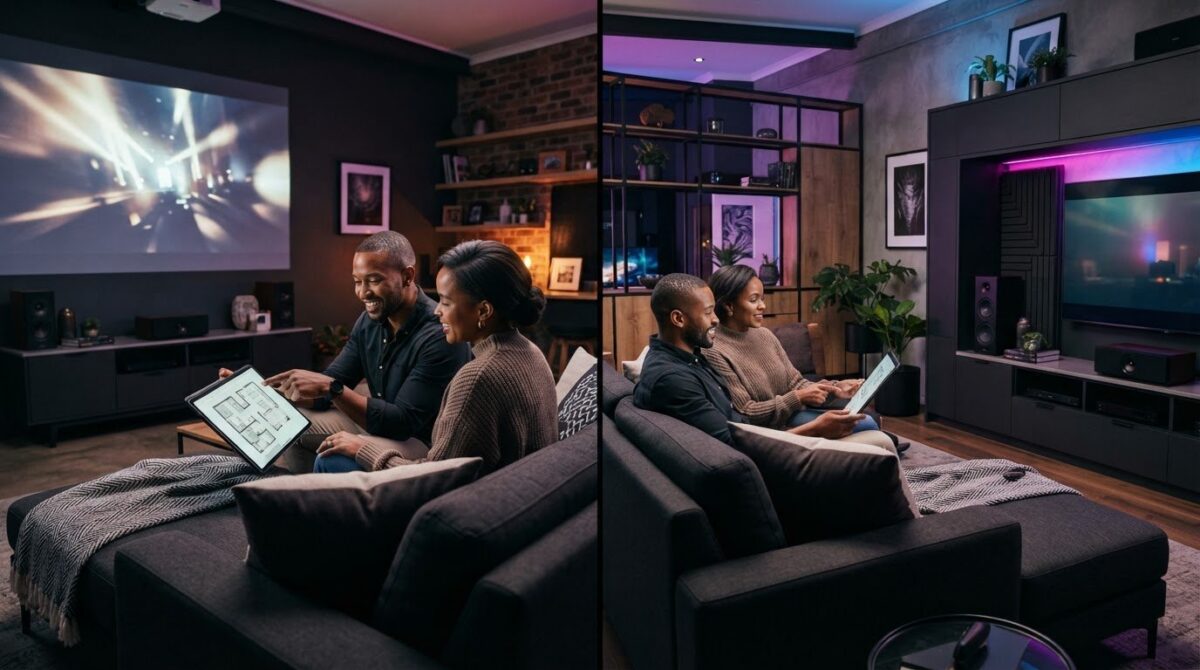
What if the strongest case for a home cinema has nothing to do with the equipment? If the idea risks sounding like an expensive personal indulgence, start with what you both enjoy watching and how you use your living space. The question of how to convince your partner you need a home cinema becomes more constructive when it’s really about whether a better shared viewing experience would suit your household.
This guide will help you make that case calmly and practically. Begin with your viewing habits, from weekend films to gaming or live sport, then consider the room, everyday routines and priorities you share. You’ll also see how different approaches to picture and sound can shape the experience, without assuming you need a dedicated cinema room or a full system from the outset. By the end, you’ll have a clearer way to compare options and agree on a sensible next step, whether that’s exploring the space together or learning more about projectors and home entertainment audio.
Key Takeaways
- Build your case around occasions you both value, then use them to define what a home cinema should do for your household.
- Turn concerns about space, setup and spending into practical criteria for comparing options, rather than treating them as objections to overcome.
- Compare projector-led and screen-and-audio approaches against your room, routines and viewing habits.
- Work out how to convince your partner you need a home cinema by agreeing on shared priorities and presenting a shortlist, not a one-sided equipment pitch.
- Explore how Epson home cinema projectors and Bose audio solutions from SoundXcel could contribute to a setup shaped around your priorities.
Start with the shared experience a home cinema could create
Partners can value entertainment, living space and household priorities differently. One may picture an immersive film night; the other may be thinking about furniture, everyday use or whether the idea will take over the room. If you’re considering how to convince your partner you need a home cinema, begin with the experience you hope to share, not a pitch for particular equipment.
Before discussing screens or sound, list the occasions when a better viewing setup could make a difference. Think about film nights, following sport together, watching a series as a family or bringing everyone into the same room for a special event. A home cinema is a household viewing setup, not necessarily a dedicated room.
For another perspective on the idea, watch this video about discussing a home theatre with your partner:
How to explain why the idea matters to you
Make it personal and specific. Instead of saying, “We need a better system”, describe a moment you’d genuinely enjoy: settling in for a film without struggling to hear dialogue, watching a big match together, or making a family movie night feel like an occasion. These examples explain the appeal without suggesting that your current home or habits are inadequate.
Use first-person language. Try, “I’d love to make our film nights more enjoyable, but I want us both to feel comfortable with the plan.” Then invite your partner in: “What would make watching together better for you?” Their answer might be simpler controls, less equipment in view, or a room that stays flexible. Treat that response as part of the brief, not an obstacle.
What to understand before starting the conversation
Take a practical look at how your household watches. How often do you watch films, series or sport together? Do children or other family members use the same space? Notice friction points as they happen, such as dialogue that’s hard to follow, a screen that feels awkward to view, or a setup that takes too much effort to use. Specific observations make the discussion more grounded than a general claim about needing better entertainment.
- Note which shared viewing occasions matter most to each of you.
- Consider how the room is used outside viewing time, including its furniture and everyday routines.
- Ask what each person values most: a cinema-like picture, clearer sound, simple use or minimal visual impact.
Keep preferences open at this stage. You may favour a projector-led experience, whilst your partner prefers a screen-and-audio arrangement. Neither preference settles the decision on its own. Home cinema systems can involve different combinations of picture and sound, so focus first on the outcome that suits your household. Once you understand the shared priorities, equipment becomes a practical choice rather than the starting point.
Address the real objections: space, disruption and perceived expense
Questions about room layout, setup and spending deserve a proper answer. Treat them as decision criteria, not resistance to overcome. A useful conversation asks what would make a home cinema workable for everyone, and what would make it feel like too much. That shift keeps the discussion practical, especially if one partner is excited by the idea and the other is concerned about its impact on daily life.
A home cinema doesn’t have to mean a room reserved exclusively for films. It can be a shared-use entertainment setup that fits into the way your household already lives. Start with the room and its routines, rather than assuming you need a dedicated cinema space.
How to discuss space and everyday use
Look at where you already watch content. Is it the lounge, a family room or another shared space? Note which furniture needs to stay, how people move through the room and whether the layout works for everyday activities such as reading, hosting or relaxing. Be specific about what must remain convenient, rather than treating the room as a blank canvas.
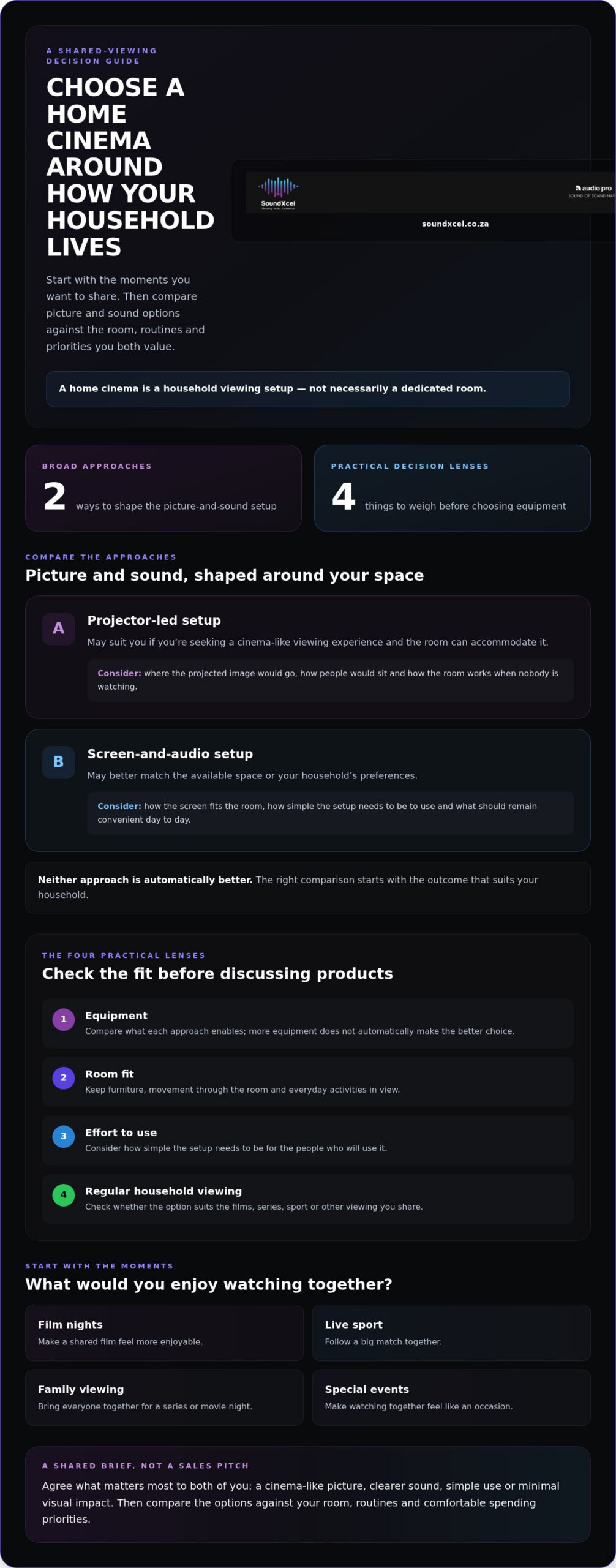
Then compare broad approaches. A projector-based setup may appeal if you’re seeking a cinema-like viewing experience and the room can accommodate it; a screen-and-audio option may better match the space or your household’s preferences. Neither is automatically the better choice. Consider where the screen or projected image would go, how people would sit, how simple the setup needs to be to use, and what happens when no one is watching. Practical guides, including benefits and setup considerations for a home theatre, can help you think through factors such as space, sound and comfort.
Agree on the room’s everyday purpose before discussing equipment. Perhaps the furniture shouldn’t need to move for a viewing, or the shared space should still feel comfortable when the screen is off. Those preferences help shape a proposal that respects both the viewing experience and the rest of the household’s needs.
How to talk about budget without pressure
Perceived expense can be difficult to discuss if the conversation jumps straight to products. First, ask what level of household spending feels comfortable and whether there are other priorities to account for. You don’t need to settle on a figure immediately. The aim is to understand whether you’re both open to exploring the idea and what trade-offs would feel reasonable.
Separate the decision into parts: equipment, how it fits the room, the effort involved in using it and whether it will suit regular household viewing. A simpler approach may align better with your priorities than a more elaborate one. Keep the comparison focused on what each option enables and what it asks of the space, budget and routine. More equipment doesn’t automatically mean a better shared experience.
Suggest a planning stage before any purchase decision. Note room constraints, list shared priorities and shortlist a couple of approaches to consider together. If you want to explore picture and sound options as part of that research, SoundXcel’s home cinema solutions include Epson home cinema projectors and Bose audio. Use these categories as a starting point for discussing what may suit your household, without turning an initial conversation into a commitment.
Compare home cinema approaches by what your household values
Once you’ve agreed on what matters, compare approaches against the room and the way you watch. The aim isn’t to prove that one type of system is superior. It’s to see which trade-offs feel right for your household. A projector-led setup can create a more cinema-like picture, whilst a screen-and-audio arrangement may suit a living room where everyday convenience is a priority.
The best setup is the one that fits your household’s room and viewing habits. Use a simple comparison to make preferences visible, then discuss where you’re willing to compromise.
| Consideration | Projector-led approach | Screen-and-audio approach |
|---|---|---|
| Viewing habits | May appeal if you want a more immersive, cinema-like feel for shared films or events. | May suit a mix of everyday viewing, series, sport and occasional films. |
| Room fit | Room conditions and layout influence how well a projected image suits the space. | Consider how a screen and audio components fit with existing furniture and routines. |
| Ease of use | Discuss how the viewing setup would work in your usual routine. | Consider the controls and setup your household would find comfortable to use. |
| Shared priorities | Could favour a more dedicated viewing experience if that’s important to both of you. | Could better match a preference for a flexible, everyday entertainment space. |
Projector-led viewing versus a simpler living-room setup
A larger projected image can make a film feel like an occasion, but the room shapes whether that approach makes sense. Think about the viewing position, available wall or screen area, furniture placement and how the space is used at other times. A simpler screen arrangement may feel more natural for frequent, spontaneous viewing. Compare how each option fits the room, not just how it looks during a film.
Why sound deserves a place in the comparison
Picture and sound work together in the viewing experience. Clear dialogue can matter during a quiet drama, while a more involving sound experience may add to compatible films or sport. Dolby Atmos applies to content made for that format, so don’t assume every programme will use it. SoundXcel offers Epson home cinema projectors and Bose audio solutions as categories to consider, not as a guaranteed package. For broader audio selection guidance, explore this Bose sound system guide.
To work out how to convince your partner you need a home cinema, compare options using the same household criteria: room fit, viewing habits, ease of use and shared priorities. You could each mark what matters most, then discuss where your choices overlap. That keeps the conversation focused on a setup you can both live with, rather than on a particular brand or specification.
Make a practical proposal your partner can evaluate
A thoughtful proposal gives both of you something concrete to assess without turning the conversation into a sales pitch. Keep the process simple: agree on the goal, record the constraints, compare suitable approaches and choose one manageable next step. This structure helps you work out how to convince your partner you need a home cinema by showing how the idea could fit your shared priorities, not by insisting on a particular system.
A conversation plan that keeps both partners involved
Start with one shared viewing goal, such as making a regular film night more enjoyable. Ask your partner to add a priority of their own, perhaps keeping the room flexible or making everyday use straightforward. Then agree which constraints matter most. Summarise the points you both accept before discussing differences, so the shortlist reflects shared criteria rather than one person’s preferred products.
- Agree the goal. Describe the viewing experience you’re hoping to improve, in terms you can both recognise.
- Note the constraints. Include room use, layout, simplicity, the content you watch and any household spending priorities.
- Compare approaches. Look at projector-led and more compact screen-and-audio options against those agreed criteria.
- Choose a next step. Decide together whether to research further, map the room or explore a relevant guide.
Keep a shared shortlist brief. For each option, note what it might help with, what trade-offs it brings and which agreed priority it serves. If you disagree, record the question rather than forcing a decision on the spot. You can also compare how each approach feels against your real viewing habits: what you watch, how often you use the room and how much effort you want setup to involve. Decide in advance what matters most, such as the overall viewing experience or how well the approach fits your routines.
Turn the discussion into a realistic next step
Make the next step proportionate to the conversation. If you’re still unsure about the room, sketch its layout and mark where people sit and how the space is used. If you’re comparing system approaches, explore the Bose Lifestyle and Epson projector setup guide to help frame the planning discussion. Neither action commits you to buying equipment.
If an Epson projector is on your shortlist, use the Epson projector buyer’s guide to inform your research. Keep the conversation focused on what you both want to learn, rather than treating a guide or product comparison as a purchase decision. The aim is a considered next move that feels comfortable for the household.
Once you’ve agreed on the criteria, explore home cinema options with SoundXcel to make the discussion more informed. Bring your shared priorities and room considerations into the process, and use them to shape what you investigate next.
Explore a home cinema solution together with SoundXcel
Once you’ve agreed what you want from shared viewing, you can explore how picture and sound options might support that experience. SoundXcel serves customers across South Africa with premium Bose audio solutions and Epson home cinema projectors. The purpose isn’t to match every household to the same setup. It’s to consider how different options could work with your room, viewing habits and shared priorities.
Keep your agreed criteria in view as you browse. If a projector-led experience interests you, consider what the room needs to support it. If sound is a priority, discuss what you want to hear more clearly or enjoy more fully. Thinking about these as connected parts of the viewing experience helps you explore a considered solution without assuming particular products form a package or suit every space.
What to explore when considering projector and audio options
Begin with the outcome you both want, then explore picture and sound categories in that context. A large projected image may suit one room and viewing style, while another household may place greater value on audio or everyday versatility. SoundXcel’s home cinema setup guide offers a more detailed overview to support your discussion. Use it to develop questions around your priorities, rather than treating any one approach as a universal answer.
It can help to browse together and take turns choosing what to investigate. One partner might focus on the viewing experience, whilst the other considers how a solution could fit into the room. Bring those perspectives together: note which options address both, and where you’d want to weigh a trade-off. That makes the process collaborative and keeps the household’s needs at the centre.
Agree the next step without making the decision feel rushed
Exploring options doesn’t have to mean deciding immediately. You might set aside time to browse relevant Bose and Epson solutions, then discuss what feels suitable and what questions remain. SoundXcel’s Bose audio solutions and Epson home cinema projectors give you options to explore together. Treat that research as a way to learn, not a commitment to buy.
As an independent authorised retailer and installer of Bose and premium AV brands in South Africa, SoundXcel can help you explore relevant audio and projector options in light of your household’s priorities. Share what you’ve agreed about the room and viewing experience, and use that as the basis for a more informed conversation. This is a practical next step if you’re still working out how to convince your partner you need a home cinema: keep it about finding an approach you can both feel comfortable exploring.
Explore home cinema solutions with SoundXcel together, at a pace that suits you both.
Take the next step together
A home cinema decision doesn’t need to be settled in one conversation. Let your shared priorities guide what you explore next, and give both of you room to ask questions as your ideas become more specific. That’s a more considered way to approach how to convince your partner you need a home cinema: focus on finding an option that feels right for your household, rather than winning an argument.
SoundXcel’s South African range includes Epson home cinema projectors and premium Bose audio solutions. As an independent authorised retailer and installer of Bose and premium AV brands, SoundXcel can help you explore picture and sound options with your room and viewing priorities in mind.
Take a look together, compare what interests you, and decide on your next step when you’re ready. Explore home cinema solutions with SoundXcel and start shaping an experience you can both enjoy.
Frequently Asked Questions
How do I convince my partner to get a home cinema?
Start by explaining a specific moment you’d enjoy together, then ask what would make that occasion worthwhile for your partner. You might say, “I’d like our match nights to feel more engaging. What would you change about watching at home?” Listen without rebutting their answer. If they mention clutter or complicated controls, treat that as part of the brief. Agree to investigate one question together before looking at specific products.
Is a home cinema worth it if we do not have a dedicated cinema room?
Yes, a dedicated room isn’t essential for a more involving home viewing experience. A shared lounge can serve several purposes, so consider whether the setup would work for weekday television, visiting friends and other routines as well as film nights. Talk about how much the room should change, if at all. The value depends on whether the viewing experience feels worthwhile to your household, not on having a separate cinema space.
Can a home cinema work in a small living room?
It may be possible, depending on the room’s layout and how you use it. Before comparing equipment, note where people sit, what needs to remain accessible and whether furniture is regularly moved. A simple sketch can help you see how a projector-led approach might differ from a screen-and-audio setup. Use those observations to discuss compromises together; a solution that feels comfortable in one small room may not suit another.
What should we consider before choosing a home cinema system?
Consider your usual content, how you watch it and what each person hopes to improve. For example, one partner may care most about following dialogue, while another values a more involving film experience. Also think about seating, the room’s everyday function, ease of use and your agreed spending boundaries. Write down your priorities before exploring specifications, so the details you compare relate to things your household will actually notice.
How can I discuss the cost of a home cinema with my partner?
Begin with a shared spending boundary, not a product price or a persuasive sales pitch. Talk about what the household would prioritise and which features matter less if you need to make trade-offs. You could agree to research options first, then review them together against those limits. Keep research separate from a purchase decision: learning what different approaches involve doesn’t mean either of you has agreed to buy.
What if my partner still does not want a home cinema?
Accept their answer for now and ask, without pressure, what sits behind it. They may be concerned about changing the room, adding complexity or simply not using the system often. If there’s a smaller practical issue you can address without buying equipment, such as adjusting seating for a film, try that first. If there’s no shared interest, pause the discussion and revisit it only if your household priorities change.
Do we need a projector for a home cinema experience?
No. A projector is one possible route, not a requirement for enjoying a more considered home cinema experience. It may appeal if you’re seeking a cinema-style presentation, while a screen-and-audio approach could better fit your room or viewing routine. Discuss what you watch most and how you want the room to feel during everyday use. Then compare the options together, rather than assuming a particular piece of equipment defines the experience.
